| Day | Location | What You’ll Do |
| 1 | Nairobi → Maasai Mara | Morning flight into the Mara (or road transfer), afternoon game drive near your camp |
| 2 | Maasai Mara | Full-day river crossing watch at the main crossing points (Crossing Points 1-4), packed lunch in the field |
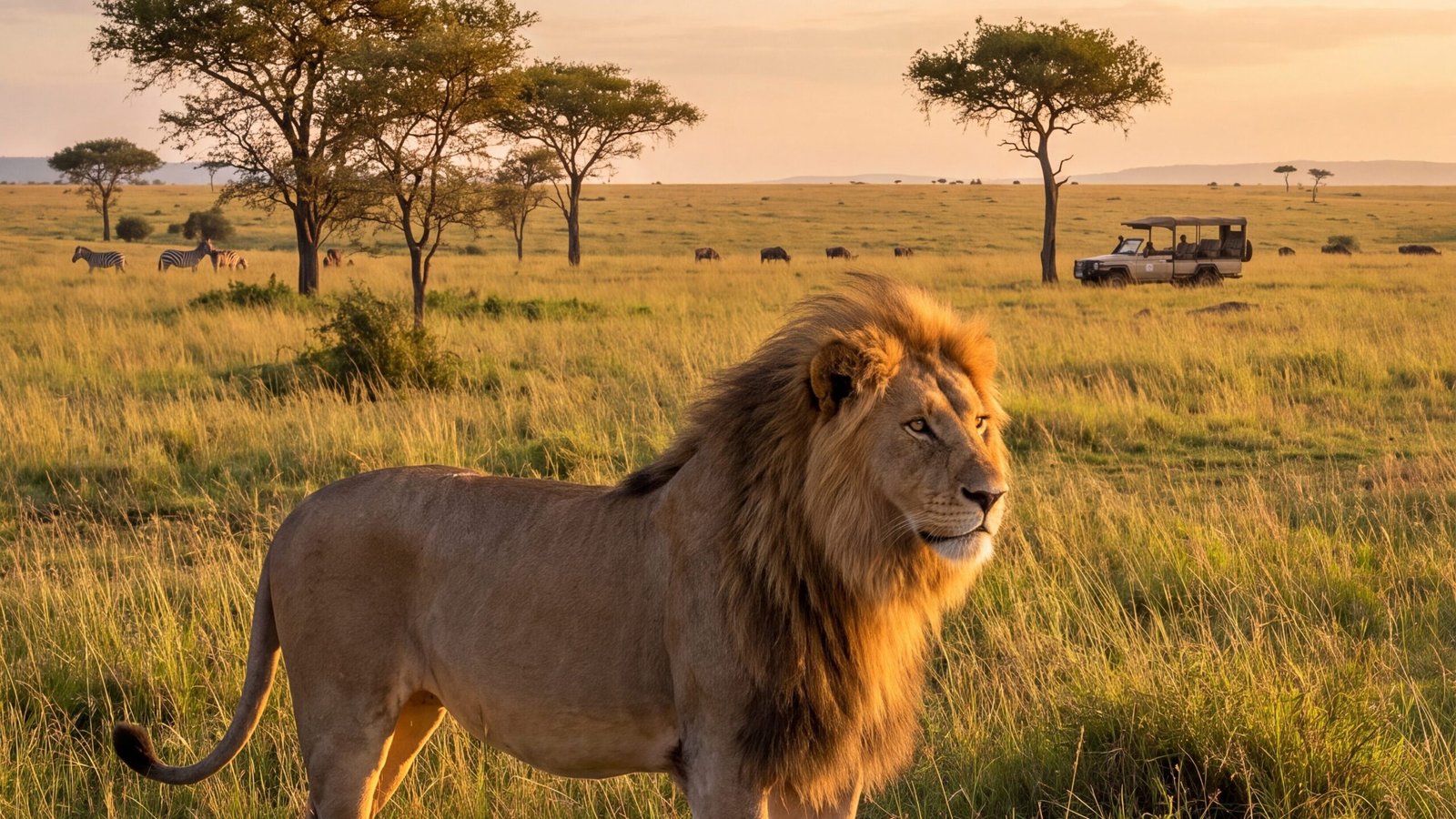
| 3 | Maasai Mara | Dawn game drive for predators (lion, cheetah), afternoon Mara Triangle exploration |
| 4 | Maasai Mara | Second full day positioned at the river, back-up drive to Sand River if the main herd hasn’t committed |
| 5 | Maasai Mara | Maasai village visit (optional), sundowner game drive, hot air balloon safari (optional add-on) |
| 6 | Maasai Mara → Nairobi | Final morning game drive, afternoon flight back to Nairobi for onward connection |
When Do the River Crossings Actually Happen?
This is the part every Kenya-bound traveler asks about, so let’s be precise instead of vague. The Great Migration reaches the Maasai Mara from July through October, but the crossings — where the herds plunge across the Mara River into crocodile-infested water — cluster in a narrower window. Most 2026 forecasts put peak crossings somewhere between August 10-12 and September 20-25, with the exact dates shifting year to year based on rainfall patterns.
If you can only pick one month, August remains the safest bet: it’s traditionally the highest-probability window, and crossings typically continue on into September as well. September is a solid alternative if you’re chasing lower crowds — by then the bulk of the herds have usually crossed, but you can still catch latecomers, with noticeably fewer vehicles at the riverbanks than during peak August.
Worth knowing before you lock dates: the migration isn’t as clockwork as it used to be. Traditionally, herds arrive in the Mara around mid-July with peak crossings in August, but recent years (2022, 2023, 2025) have shown the most intense crossing activity occasionally delayed by one to two weeks. That’s exactly why Travelexie recommends building in at least 4-5 nights near the river rather than a 2-day dash, and staying flexible on which camp cluster you book into.
For travelers weighing Kenya against a Tanzania-side viewing, both sides of the border see action in peak season — many travelers split time across the Serengeti and Maasai Mara during August-September to widen their odds of catching a crossing.
How Long Should You Wait at the River?
This is where a lot of first-time safari travelers underestimate the patience required. Wildebeest can gather at a riverbank for hours — sometimes days — before actually committing to a crossing. It’s genuinely possible to spend three full days in the Mara during peak August with excellent general game viewing and still not see one. That’s the reason Travelexie’s itinerary for Kenya always builds in a minimum of two full days positioned near the crossing points, not one rushed morning drive.
Getting There from India
There’s no direct Nairobi flight from most Indian metros, but connections are straightforward. Kenya Airways and Qatar Airways/Emirates/Etihad routings via Doha, Dubai, or Abu Dhabi typically run 8-10 hours total travel time from Delhi or Mumbai, including a short layover. From Nairobi, it’s a 45-minute domestic flight into one of the Mara’s airstrips (Keekorok, Ol Kiombo, or Musiara, depending on which camp cluster you’re staying in) — Travelexie books this connection as part of your package rather than leaving you to sort it out separately once you land.
On the visa side, Indian travelers need a Kenya Electronic Travel Authorization (eTA), applied for online before departure — there’s no visa-on-arrival option anymore. The standard eTA fee runs around USD 30-34, it’s single-entry, valid for 90 days from issue, and usually processes within about 3 business days. Travelexie recommends applying at least a week ahead to build in a buffer. If your trip combines Kenya with Tanzania, Uganda, or Rwanda, note that a fresh eTA (or the East African Tourist Visa, which covers all three of Kenya, Uganda, and Rwanda) may apply for re-entry.
Cost Breakdown (Per Person, Twin Sharing)
Migration-season pricing runs higher than off-peak Kenya trips because camps near the river fill up 12-18 months out. Here’s how Travelexie typically breaks this down for a 6-day/5-night Maasai Mara migration safari:
Budget tier (₹1,45,000 – ₹1,85,000):
- Flights (Delhi/Mumbai–Nairobi return, via Gulf hub): ₹45,000–55,000
- Domestic flight to Mara airstrip (return): ₹18,000–22,000
- Mid-range tented camp, 5 nights, full board: ₹55,000–70,000
- Park entry fees + conservancy fees: ₹20,000–25,000
- Kenya eTA: ~₹2,700
Mid-range tier (₹2,00,000 – ₹2,80,000):
- Same flights, upgraded to a river-view or premium tented camp
- Private game drive vehicle (vs. shared)
- Additional activities (Maasai village visit, guided walk)
Luxury tier (₹3,20,000+):
- Riverfront luxury camp with private crossing-point access
- Hot air balloon safari add-on (~₹35,000-40,000 per person)
- Private guide for the full stay
The reason Travelexie itemizes this instead of quoting one bundled number: migration-season Kenya quotes from many operators bury park entry fees, conservancy fees, and domestic flight costs inside a single “package price,” so you don’t find out what’s actually covered until you’re comparing invoices after booking. Travelexie’s quotes list each of these separately upfront.
Why Book With Travelexie
Travelexie’s Kenya safari quotes are itemized — flights, camp costs, park and conservancy fees, domestic transfers, and visa assistance are each listed as separate line items, not folded into one number. This matters specifically for Kenya because park entry fees (typically USD 80-100 per day for the Maasai Mara) and conservancy fees are two of the most commonly hidden costs in competitor quotes — travelers often discover only after booking that these were never included, and end up paying more on the ground than they budgeted for. Travelexie states these upfront so what you see in your quote is what you pay, with zero surprises when you land in Nairobi. Given how tight migration-season camp availability gets, having a clear, itemized quote also means you can compare Travelexie’s pricing directly against any other operator’s — line by line.
Practical Notes for Indian Travelers
- Vegetarian food: Most Mara camps can accommodate vegetarian and Jain meal requests with advance notice — flag this when Travelexie confirms your booking, not on arrival.
- Currency: Kenyan Shilling (KES) is the local currency; USD cash is widely accepted at camps and airstrips for tips and incidentals. Carry small denominations.
- Connectivity: Most tented camps have limited or no in-room Wi-Fi; expect patchy signal in the bush. This is normal, not a service issue.
- Packing: Neutral-colored safari clothing (khaki, olive, brown), a warm layer for early-morning game drives (temperatures can drop to single digits Celsius at dawn even in August-September), and a good zoom lens if you’re serious about photographing the crossings.
- Booking lead time: River-view camps for August-September 2026 are already filling up as of this writing — Travelexie recommends locking dates at least 8-10 months out for peak-season availability.
Ready to Plan Your Trip?
If you’re weighing August against September, or trying to figure out how many nights you actually need near the river, Travelexie can walk you through a customized itinerary and an itemized quote based on your travel dates and budget. No pressure to book on the first call — just a clear breakdown of what a migration-season Kenya trip actually costs, so you can plan with real numbers instead of guesswork.