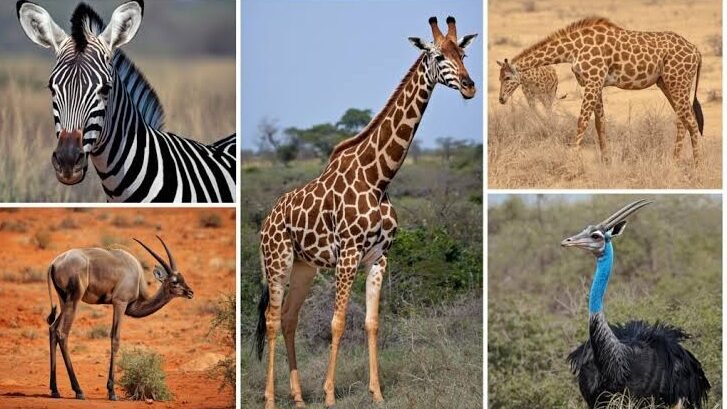
Every year, millions of wildebeest, zebras and other grazing animals move across the vast landscapes of East Africa in search of fresh grass and water.
Known as the Great Wildebeest Migration, this extraordinary natural event is one of the most spectacular wildlife experiences on Earth.
For travellers visiting Kenya, the Maasai Mara is the place where the migration reaches its most dramatic moments — from enormous herds crossing the savannah to the famous river crossings.
But when does the migration happen? Where should you go? And how can you plan the perfect Kenya safari around it?
Let’s explore.
What Is the Great Wildebeest Migration?
The Great Wildebeest Migration is an enormous seasonal movement of wildlife between Tanzania’s Serengeti and Kenya’s Maasai Mara.
Around 1.5 million wildebeest, along with hundreds of thousands of zebras and gazelles, participate in this continuous search for fresh grazing and water.
It isn’t a single event that happens on one particular day.
Instead, the animals are constantly moving throughout the year, following rainfall and the availability of food and water.
This makes the migration a year-round natural cycle rather than a simple annual journey.
When Does the Great Migration Reach Kenya?
The migration usually reaches the Maasai Mara between around July and October, although exact timing changes every year depending on rainfall and environmental conditions.
This period is especially popular because large herds may gather in the Mara and dramatic Mara River crossings can occur.
However, there is no guaranteed migration date.
Nature doesn’t follow a calendar.
The herds may arrive earlier or later, remain in an area for different lengths of time, or move according to local weather conditions.
That unpredictability is part of what makes the experience so exciting.
The Great Migration Month by Month
July – The Journey Towards Kenya
Around July, large herds begin moving towards the northern Serengeti and the Maasai Mara ecosystem.
This can be an exciting time to visit because the migration is beginning to enter Kenya.
Wildlife numbers can already be impressive, while safari landscapes remain relatively open.
August – Peak Migration Excitement
August is one of the most popular months for travellers hoping to experience the migration.
Large herds may be present in the Maasai Mara, and river crossings can occur during this period.
However, crossings are completely unpredictable.
You could wait for hours — and nothing happens.
Then suddenly, the herd begins moving.
September – Wildlife Across the Mara
September can continue to offer excellent migration experiences.
Large groups of wildebeest and zebras may still be moving through the Maasai Mara, while predators take advantage of the abundance of prey.
For many travellers, this combination of dramatic landscapes and predator sightings creates an unforgettable safari.
October – The Herds Begin Moving On
By October, some herds may begin moving back towards the Serengeti as environmental conditions change.
The exact timing varies each year.
This means October can still offer excellent wildlife viewing without necessarily being as focused on river crossings as the earlier migration period.
The Famous Mara River Crossing
When people imagine the Great Migration, one scene often comes to mind:
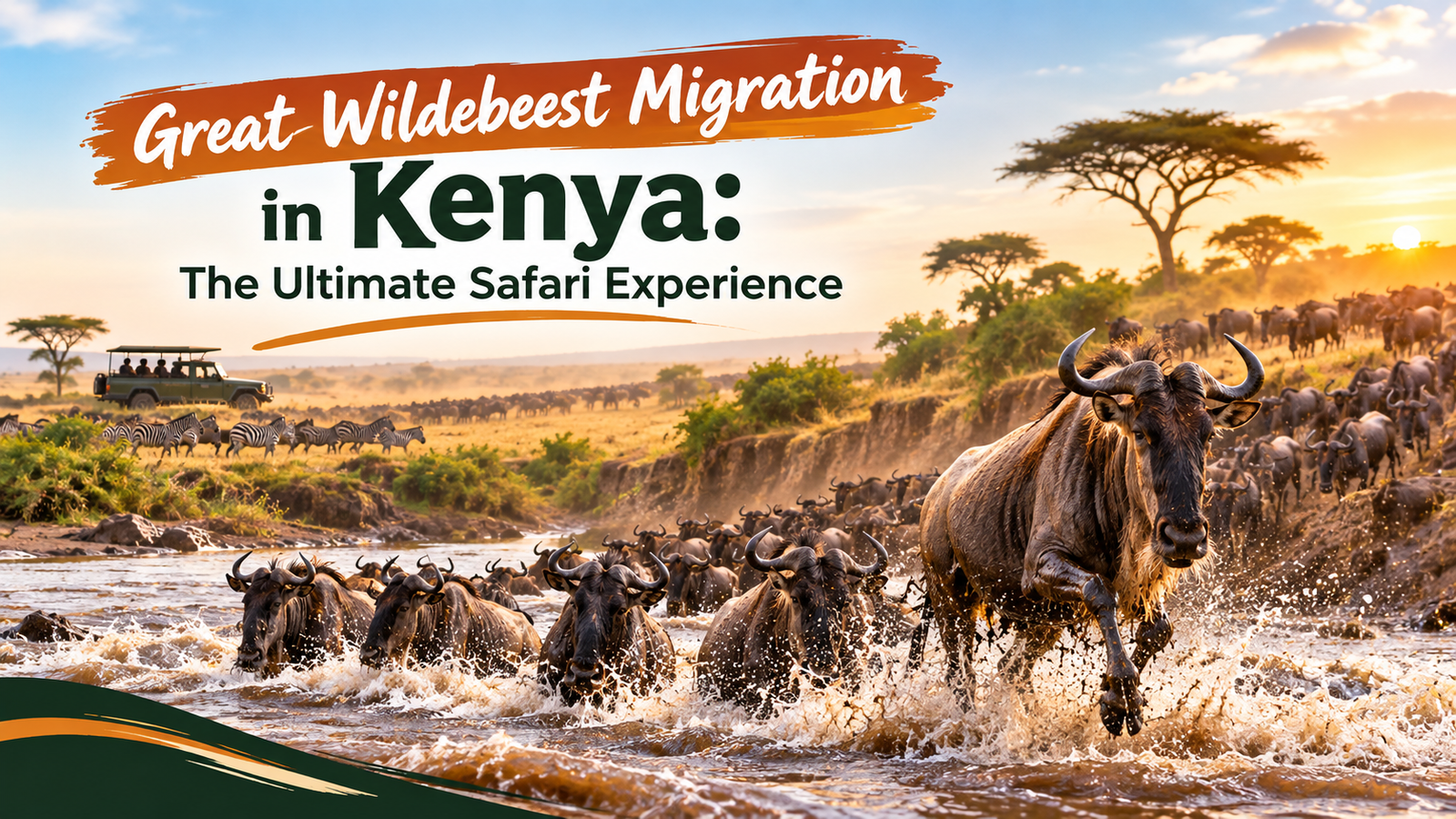
Thousands of wildebeest gathering at the edge of a river before suddenly rushing into the water.
The Mara River crossing is one of the most dramatic spectacles associated with the migration.
But it is important to understand that crossings are not guaranteed.
Wildebeest may gather near the river for hours or even days before crossing.
Sometimes they approach the water, turn around and walk away.
Then, without warning, one animal takes the first step — and the entire herd can suddenly follow.
This unpredictability makes witnessing a crossing incredibly special.
Why Do Wildebeest Cross the River?
The animals are following their natural migration route in search of fresh grazing and water.
The river is part of their journey between different grazing areas.
Crossing it comes with serious risks, including strong currents, steep banks and predators.
Crocodiles may wait in the river, while lions and other predators can take advantage of vulnerable animals around the crossing areas.
It is one of nature’s most dramatic examples of survival and instinct.
More Than Just Wildebeest
Although wildebeest are the stars of the migration, they aren’t travelling alone.
The migration ecosystem includes huge numbers of other animals.
Zebras
Zebras travel alongside wildebeest and are an important part of the migration spectacle.
Thomson’s Gazelles
These smaller antelope also follow the availability of fresh grazing.
Lions
Large concentrations of prey attract predators, making migration season an exciting time for big-cat sightings.
Leopards
The elusive leopard may be spotted resting in trees or hiding among vegetation.
Cheetahs
The open grasslands of the Maasai Mara provide excellent habitat for cheetahs, although sightings are never guaranteed.
Crocodiles
During river crossings, large Nile crocodiles may wait in the water for an opportunity to catch prey.
The result is a complete ecosystem where predator and prey interactions can unfold naturally.
Where Is the Best Place to Experience the Migration in Kenya?
Maasai Mara National Reserve
The Maasai Mara is Kenya’s most famous migration destination.
Its expansive grasslands provide an incredible setting for watching wildlife, and the Mara River forms one of the key crossing areas associated with the migration.
For first-time safari travellers, the Maasai Mara is often the natural starting point for a migration-focused Kenya itinerary.
Mara Conservancies
Private conservancies surrounding the Maasai Mara can offer a more exclusive safari experience.
Depending on the conservancy and safari camp, visitors may benefit from fewer vehicles and a quieter wilderness atmosphere.
A combination of the national reserve and a private conservancy can create a well-rounded safari experience.
What Is the Best Time to Book Your Kenya Migration Safari?
If your main goal is to experience the Great Migration in Kenya, July to October is generally the most popular travel window.
However, the best month depends on your priorities.
For migration and river-crossing possibilities: July–September
For generally strong wildlife viewing: July–October
For potentially fewer visitors: Consider periods outside the peak migration window
Remember that no safari operator can guarantee a particular river crossing.
The migration is controlled by nature, rainfall and animal behaviour, not by a fixed itinerary.
How Long Should You Stay in the Maasai Mara?
For a migration-focused safari, spending multiple nights in the Maasai Mara is highly recommended.
A longer stay gives you more opportunities to:
- Search for migrating herds
- Follow predator activity
- Explore different areas
- Experience multiple game drives
- Wait patiently for possible river crossings
- Enjoy the landscape without rushing
Instead of trying to see everything in one day, give yourself time to let the safari unfold naturally.
Balloon Safari During the Great Migration
Want to see the migration from a completely different perspective?
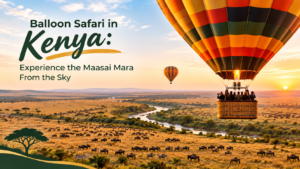
A hot-air balloon safari over the Maasai Mara can add a spectacular dimension to your journey.
As the sun rises, you can float above the savannah and see the landscape stretching towards the horizon.
From above, the scale of the Mara becomes much easier to appreciate.
A balloon safari can be combined with traditional game drives, allowing you to experience Kenya both from the ground and from the sky.
What Should You Pack for a Migration Safari?
A few essentials can make your safari more comfortable:
- Lightweight, breathable clothing
- Light jacket for early mornings
- Comfortable walking shoes
- Sunglasses
- Sunscreen
- Hat or cap
- Binoculars
- Camera with extra batteries
- Power bank
- Insect repellent
- Reusable water bottle
Neutral-coloured clothing is generally a practical choice for safari environments.
Photography Tips for the Great Migration
The Great Migration offers incredible photography opportunities, but patience is essential.
Use a Zoom Lens
Animals may be far away, especially during river crossings. A telephoto lens can help capture detailed images without disturbing wildlife.
Shoot Early and Late
Early morning and late afternoon light can create beautiful safari photographs.
Don’t Photograph Everything
Sometimes the best safari memory is the one you experience without a camera in front of your face.
Put the camera down occasionally and simply watch.
Is the Great Migration Suitable for First-Time Safari Travellers?
Absolutely.
The Maasai Mara offers an accessible introduction to African safari, with a wide variety of wildlife and experienced safari guides.
However, travellers should remember that a safari is not a guaranteed wildlife show.
You may have an incredible day filled with sightings.
Another day may be quieter.
That unpredictability is part of the adventure.
Why the Great Migration Should Be on Your Kenya Bucket List
The Great Wildebeest Migration isn’t simply about watching animals move from one location to another.
It is about witnessing one of nature’s greatest survival journeys.
Millions of animals responding to rain, grass and instinct.
Predators waiting for opportunities.
Herds moving across endless golden plains.
And sometimes, standing beside the Mara River as thousands of wildebeest gather before making one of nature’s most dramatic crossings.
This is Kenya at its wildest.
Plan Your Great Migration Safari With Travelexie
Your Great Migration experience deserves more than a rushed itinerary.
At Travelexie, we help Indian travellers plan thoughtfully designed Kenya journeys around their interests, travel dates and safari goals.
From Maasai Mara and the Great Migration to Amboseli’s elephants, Lake Nakuru’s rhinos and unforgettable safari experiences, we can help turn your Kenya dream into a carefully planned adventure.