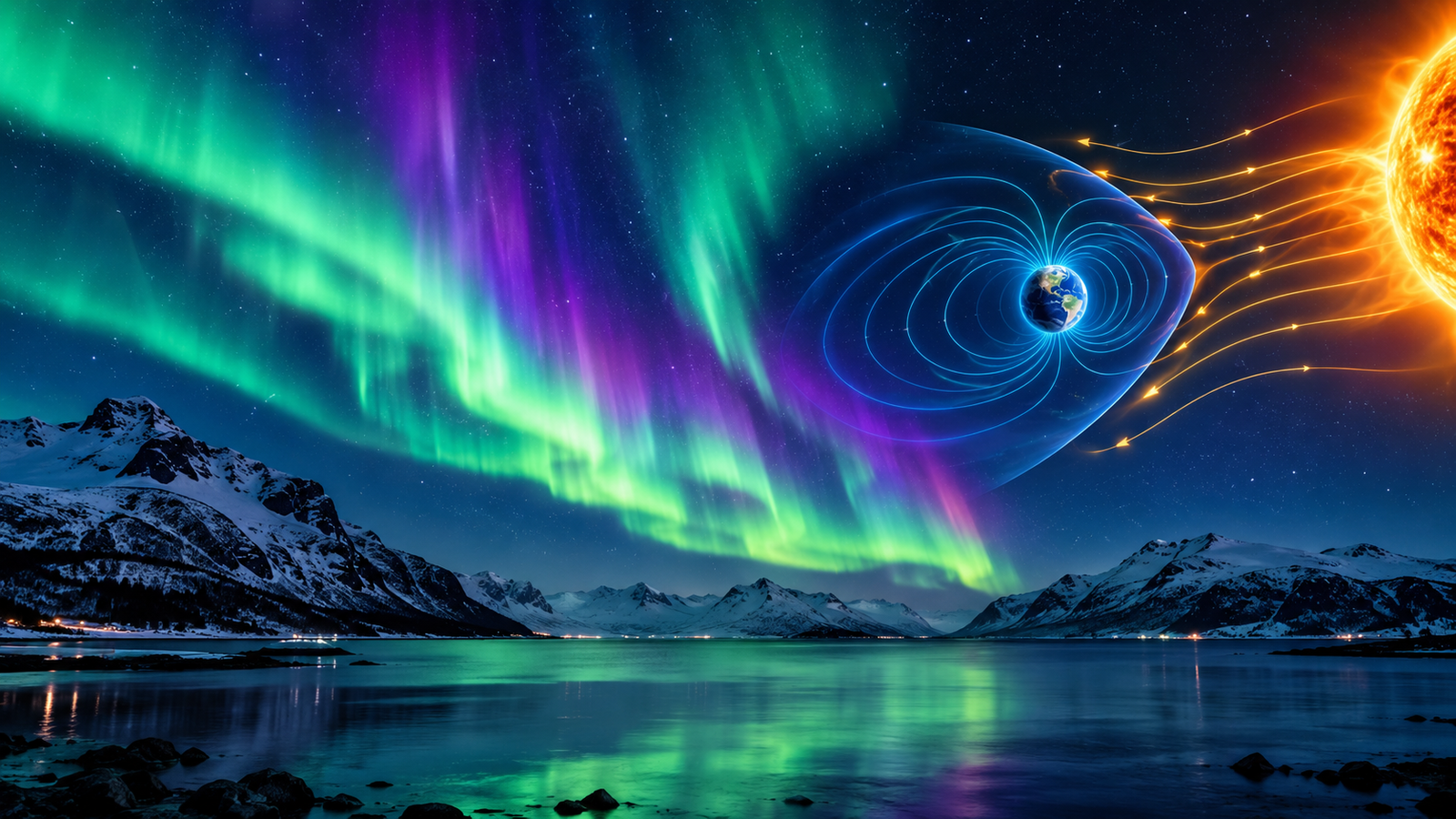
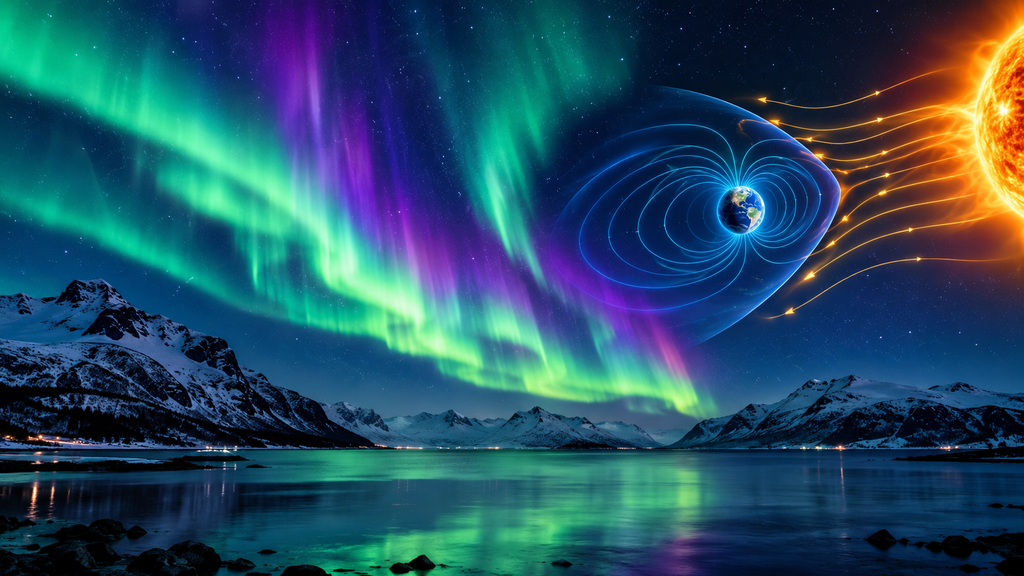
Imagine standing beneath a dark Arctic sky when suddenly ribbons of green, pink and violet begin moving across the horizon. The Northern Lights can feel almost unreal—but behind this spectacular natural phenomenon is a fascinating story of the Sun, charged particles and Earth’s magnetic field.
Known as the Aurora Borealis, the Northern Lights are one of nature’s most extraordinary light shows. But why do they happen, and why do they appear to dance across the sky?
What Are the Northern Lights?
The Northern Lights are colourful lights that appear in the night sky, mainly around the Arctic regions.
They happen when charged particles released by the Sun travel towards Earth and interact with gases in our planet’s upper atmosphere.
When these particles collide with atmospheric gases, energy is released in the form of light. That light creates the glowing curtains and waves that we know as the Aurora Borealis.
Why Does the Aurora Move?
One of the most fascinating things about the Northern Lights is their movement.
The Sun constantly releases a stream of charged particles known as the solar wind. When solar activity becomes stronger, more particles can reach Earth’s magnetic environment.
Earth’s magnetic field guides many of these particles towards the polar regions. As they interact with the atmosphere, the resulting light can shift, ripple and change shape.
This is why an aurora can appear to dance across the sky.
Sometimes the movement is slow and gentle. At other times, the lights can suddenly become much more active, forming rapidly changing waves and arcs.
Why Are the Northern Lights Green?
Green is the colour most commonly associated with the Aurora Borealis.
This happens mainly because energetic particles interact with oxygen at particular heights in Earth’s atmosphere.
However, the aurora isn’t always green.
Depending on atmospheric conditions and the altitude of the interaction, you may also see:
- Pink
- Red
- Purple
- Blue
- White or pale shades
Seeing multiple colours during a single display can make the experience even more spectacular.
Where Can You See the Aurora Borealis?
The Northern Lights are most commonly seen in regions close to the Arctic Circle.
Popular destinations include:
- Finland
- Norway
- Sweden
- Iceland
- Northern Canada
- Alaska
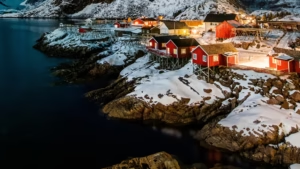
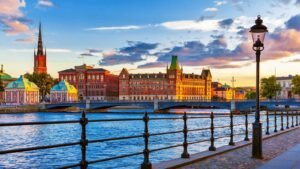
Scandinavian destinations are particularly popular among travellers because they combine Aurora viewing with unique winter experiences such as husky safaris, reindeer rides, snow activities and Arctic cruises.
When Is the Best Time to See the Northern Lights?
The Aurora requires darkness, which means the phenomenon is generally associated with the darker months of the year.
For travellers visiting Scandinavia, the season is broadly from late August or September through early spring, depending on the destination.
However, seeing the Northern Lights is never guaranteed. Clear skies, darkness and sufficient solar activity all play a role.
That uncertainty is actually part of what makes an Aurora journey so special.
You can plan the destination, the season and the experience—but the sky decides when the show begins.
The Northern Lights Are More Than Just a Photograph
It is easy to think of the Aurora as something you simply need to photograph.
But experiencing it in person can be completely different.
Standing outside in the cold Arctic night, surrounded by snow and silence, and watching a natural light display unfold above you creates a sense of scale that photographs cannot fully capture.
For many travellers, the most memorable part is not getting the perfect picture—it is simply looking up.
Beyond the Aurora
A Northern Lights holiday can also become an opportunity to experience the Arctic itself.
Depending on your destination, you can combine Aurora hunting with:
- Husky sledding
- Reindeer experiences
- Snowmobile adventures
- Arctic village visits
- Glass igloo stays
- Baltic or Arctic cruises
- Winter photography
- Traditional Nordic experiences
This makes a Northern Lights journey much more than a single evening spent watching the sky.
A Natural Wonder Written in Light
The Northern Lights are the result of a beautiful relationship between the Sun, Earth and atmosphere.
What appears to us as a magical dance in the sky is actually a remarkable natural process happening millions of kilometres away from where we stand.
And perhaps that is what makes the Aurora so captivating.
You are not simply watching lights.
You are watching space, atmosphere and our planet come together to create something that may last only a few minutes—or continue throughout an unforgettable Arctic night.
Ready to experience the Aurora for yourself?
Explore Travelexie’s Northern Lights journeys and discover the Arctic landscapes, winter experiences and destinations that make an Aurora holiday truly unforgettable.