Along the majestic banks of the River Nile, the Temples of Luxor stand as extraordinary reminders of ancient Egypt’s religious traditions, royal celebrations, and architectural brilliance. With towering columns, intricate hieroglyphics, and magnificent statues of Pharaohs, Luxor offers travellers a fascinating journey into one of history’s greatest civilizations.
The Magnificent Luxor Temple
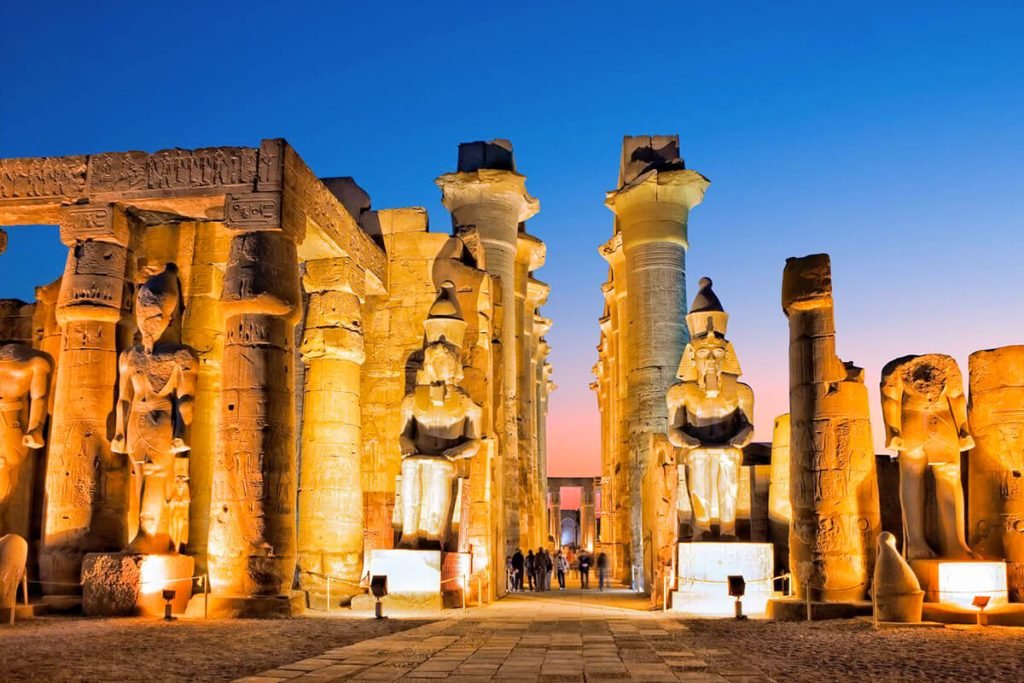
Located in the heart of modern Luxor, Luxor Temple is one of Egypt’s most remarkable ancient monuments. Built and expanded by several Pharaohs, including Amenhotep III and Ramses II, the temple was dedicated to the rejuvenation of kingship and played an important role in ancient religious celebrations.
Visitors can admire its monumental entrance, towering statues of Ramses II, impressive colonnades, and beautifully preserved architectural details. As the temple illuminates after sunset, its atmosphere becomes especially captivating, offering a memorable experience for history enthusiasts and photographers.
Discover the Architectural Wonders
The Avenue of Sphinxes
One of Luxor’s most fascinating historical landmarks, the Avenue of Sphinxes connects Luxor Temple with Karnak Temple. This ancient ceremonial pathway, lined with sphinx statues, once played an important role in religious processions during the Opet Festival.
The Great Colonnade
The impressive colonnade inside Luxor Temple features towering columns decorated with intricate carvings and ancient inscriptions. Its extraordinary scale reflects the architectural sophistication of ancient Egyptian builders.
The Statues of Ramses II
Magnificent statues of Ramses II stand near the temple entrance, showcasing the power and artistic traditions of one of Egypt’s most celebrated Pharaohs.
Karnak Temple: A Monumental Sacred Complex
A short journey from Luxor Temple takes visitors to the magnificent Karnak Temple Complex, one of the largest religious complexes ever constructed.
Dedicated primarily to the god Amun-Ra, Karnak features enormous columns, sacred spaces, towering obelisks, and remarkable hieroglyphic inscriptions.
The Great Hypostyle Hall is among its most extraordinary attractions, featuring 134 massive columns arranged across an impressive architectural space. Walking through this monumental hall offers a remarkable glimpse into ancient Egyptian religious life and artistic achievement.
The Stories Behind Luxor’s Ancient Temples
The Temples of Luxor and Karnak were deeply connected to ancient Egyptian religious beliefs and royal traditions. During the annual Opet Festival, ceremonial processions travelled between Karnak and Luxor, celebrating the relationship between the gods and the Pharaoh.
Today, these sacred monuments continue to preserve fascinating stories through their carvings, inscriptions, sculptures, and architectural remains.
Best Time to Explore Luxor
The most comfortable months to explore Luxor are generally October to April, when temperatures are more pleasant for sightseeing.
Early morning visits are ideal for discovering the temples comfortably, while evening visits to Luxor Temple offer a beautiful atmosphere with illuminated ancient architecture.
Experience Egypt’s History with Travelexie
Exploring the Temples of Luxor is an unforgettable opportunity to discover the artistic, spiritual, and architectural achievements of ancient Egypt.
From the magnificent Luxor Temple to the extraordinary Karnak Complex, every monument reveals another chapter of the fascinating Pharaohs’ legacy.
Discover the timeless wonders of Egypt with Travelexie and experience a journey through history, culture, and extraordinary heritage.