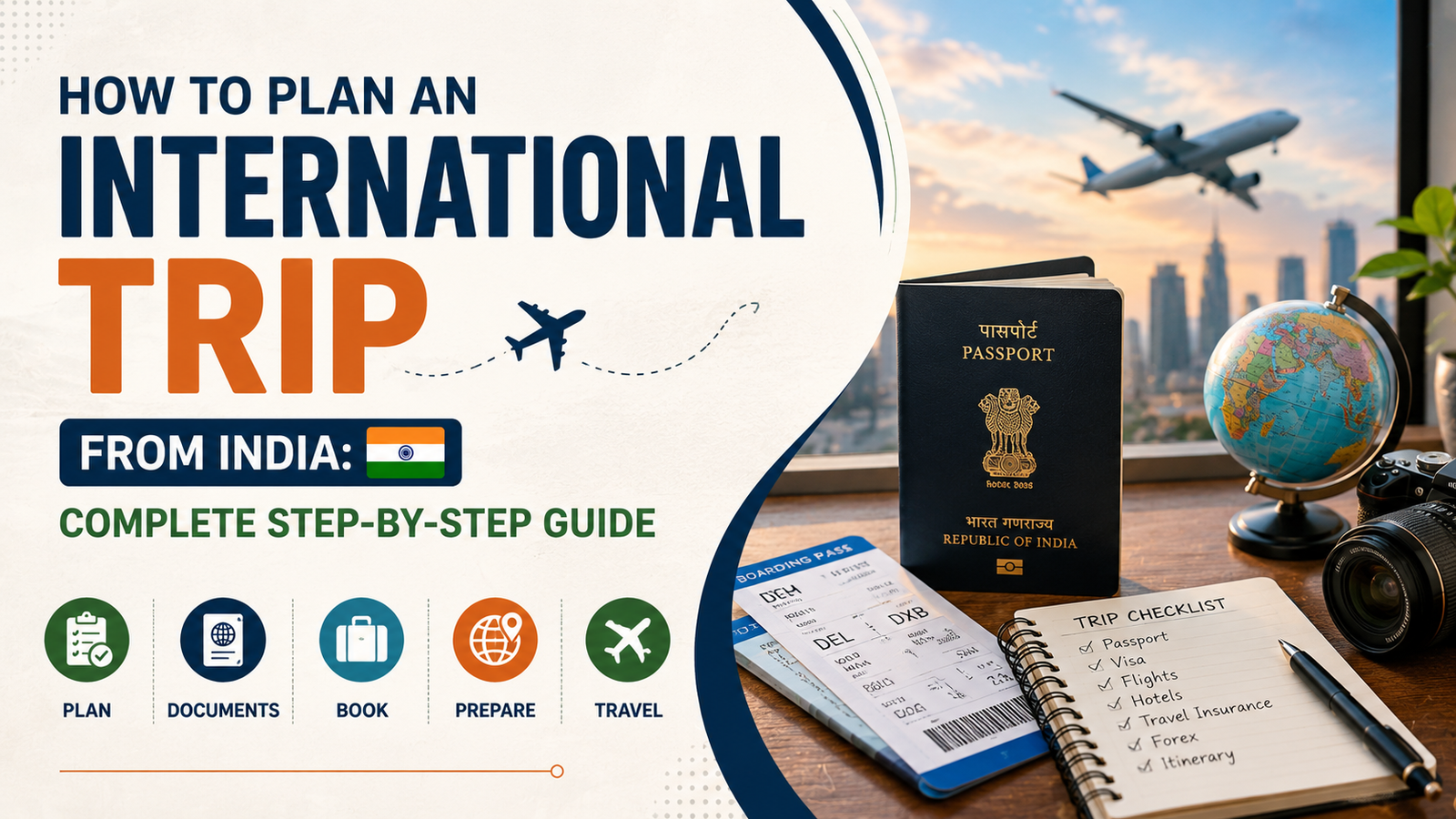
Planning an international trip from India can feel exciting, but it can also become confusing when you have to manage flights, hotels, visas, budgets, travel insurance and daily itineraries at the same time.
The good news is that planning your first international holiday doesn’t have to be complicated.
With the right process, you can choose the right destination, set a realistic budget, book the important arrangements at the right time and avoid common mistakes.
This complete guide explains how to plan an international trip from India step by step, from choosing your destination to getting ready for your flight.
Step 1: Decide What Kind of Trip You Want
Before searching for flights or hotels, decide what type of holiday you actually want.
Do you want:
- A relaxing beach holiday?
- A European sightseeing trip?
- A wildlife safari?
- A winter or snow experience?
- A romantic honeymoon?
- A family holiday?
- A cultural adventure?
- A multi-country trip?
Your travel style should influence your destination.
For example, someone looking for wildlife and adventure may enjoy Kenya, while someone interested in winter landscapes may prefer Finland and Norway. Travellers looking for culture, food and modern cities may prefer destinations such as Japan and South Korea.
Start with the experience you want, rather than simply choosing a country because it is popular.
Step 2: Choose Your Destination Carefully
Once you know what kind of holiday you want, shortlist two or three destinations.
While comparing them, consider:
Weather
Check the weather during your actual travel dates. A destination that looks perfect in photographs may not be ideal during its rainy, extremely cold or extremely hot season.
Travel Time
Consider the total flight duration and possible layovers from India.
For a short holiday, spending a large portion of your trip travelling may not be practical.
Visa Requirements
Visa rules vary by country and can change over time.
Check the latest official requirements before making non-refundable bookings. Depending on the destination, you may need a visa, e-visa, visa on arrival or another form of travel authorization.
Budget
Compare the overall cost of flights, accommodation, transportation, sightseeing, food, visa and other expenses—not just the flight price.
Step 3: Decide Your Travel Dates
Your travel dates can significantly affect your total holiday cost.
If your dates are flexible, compare different weeks before booking.
Also consider:
- School holidays
- Public holidays
- Peak tourist seasons
- Weather conditions
- Festivals and major events
- Hotel availability
Travelling during shoulder seasons can sometimes provide a better balance between weather, crowds and pricing.
Step 4: Set a Realistic International Travel Budget
One of the biggest mistakes first-time international travellers make is budgeting only for flights and hotels.
Your complete budget should include:
| Expense | What to Consider |
|---|---|
| Flights | Return airfare + baggage |
| Visa | Application and processing charges |
| Hotels | Room category and number of nights |
| Insurance | International travel insurance |
| Transport | Airport transfers + local travel |
| Food | Meals not included in bookings |
| Sightseeing | Tickets and activities |
| Currency | Cash + international payments |
| Shopping | Personal shopping budget |
| Emergency Fund | Extra money for unexpected expenses |
A good travel budget should leave some room for unexpected expenses.
Step 5: Check Your Passport
Before making international travel plans, check your passport validity and available pages.
Many countries require passports to remain valid for a certain period beyond the intended stay. Some destinations may also have additional entry requirements.
Don’t wait until the last minute to discover that your passport needs renewal.
Step 6: Understand the Visa Process
Visa planning is one of the most important parts of an international trip.
Depending on your destination, the process may involve:
- Checking eligibility
- Completing an online application or form
- Preparing supporting documents
- Providing photographs or biometrics where required
- Paying the applicable fee
- Attending an appointment, if required
- Waiting for the decision
Common documents can include passport details, photographs, travel plans, accommodation information, financial documents and other supporting paperwork depending on the destination.
Important: Visa requirements can change, so always verify the latest requirements through the destination country’s official government or immigration website.
Step 7: Plan Your Flights
Once your dates and visa strategy are clear, compare flight options.
Don’t look only at the cheapest fare.
Check:
- Baggage allowance
- Number of stops
- Layover duration
- Airport changes
- Departure and arrival times
- Refund/change conditions
- Total journey time
A slightly more expensive flight can sometimes save hours of travel and make your holiday much more comfortable.
Step 8: Choose the Right Hotel
Your hotel can have a major impact on your overall travel experience.
When selecting accommodation, look at more than the star rating.
Consider:
- Location
- Distance from major attractions
- Public transport access
- Room type
- Breakfast availability
- Check-in and check-out times
- Guest reviews
- Cancellation policy
- Airport accessibility
For city trips, staying close to public transportation can save both time and money.
For a resort holiday, facilities and location may be more important than being close to public transport.
Step 9: Buy Travel Insurance
Travel insurance is an important part of international trip planning.
Depending on the policy, it may provide coverage for situations such as:
- Medical emergencies
- Trip cancellation
- Trip interruption
- Lost baggage
- Travel delays
- Other covered travel-related emergencies
Before purchasing a policy, read the terms carefully and understand the exclusions, coverage limits and claim process.
Step 10: Create a Practical Itinerary
Don’t try to visit every attraction in one trip.
Instead, group nearby attractions together and leave enough time for travel between locations.
For example, a simple daily structure could be:
Morning: Main sightseeing attraction
Afternoon: Nearby attraction or local experience
Evening: Food, shopping or leisure
Keep some free time in your itinerary.
A holiday should not feel like a race from one attraction to another.
Avoid Overloading Your Itinerary
If you’re visiting three cities in seven days, constantly changing hotels may leave you exhausted.
Choose fewer destinations and experience them properly rather than trying to check everything off a list.
Step 11: Plan Your Local Transportation
Research how you will move around after reaching your destination.
Depending on the country, options may include:
- Metro
- Trains
- Buses
- Taxis
- Ride-hailing services
- Rental cars
- Private transfers
For some destinations, buying transport passes in advance can make travelling easier.
For safari destinations or remote areas, private transfers and dedicated vehicles may be more practical.
Step 12: Plan Your Money and Payments
International travel requires some preparation for payments.
Before leaving India, check:
- Whether your debit/credit card works internationally
- Foreign transaction fees
- ATM charges
- Currency conversion rates
- International spending limits
- Whether your destination commonly accepts cards
It is also sensible to carry an appropriate amount of local currency for situations where cards may not be accepted.
Avoid carrying all your money in one place.
Step 13: Get an International SIM or eSIM
Staying connected abroad can make your trip much easier.
An international SIM or eSIM can help you access:
- Google Maps
- Ride-hailing apps
- Translation tools
- Hotel information
- Online bookings
- Emergency contacts
- Messaging apps
Check whether your phone supports eSIM before purchasing one.
Step 14: Download Important Travel Apps
Prepare your phone before leaving India.
Useful categories of apps include:
- Maps and navigation
- Airline apps
- Hotel apps
- Translation
- Currency conversion
- Local transport
- Weather
- Travel documents
Download offline maps where possible, especially if you may have limited internet access.
Step 15: Prepare Your Travel Documents
Keep digital and physical copies of important documents.
Your travel folder can include:
- Passport
- Visa or travel authorization
- Flight tickets
- Hotel confirmations
- Travel insurance
- Tour itinerary
- Emergency contact information
- Important booking confirmations
Keep your original passport safely with you and avoid sharing sensitive documents unnecessarily.
Step 16: Pack According to the Destination
Don’t pack based only on the number of days.
Pack according to the destination’s weather and activities.
For a Winter Trip
Consider:
- Thermal layers
- Warm jacket
- Gloves
- Comfortable shoes
- Socks
- Moisturiser
- Weather-appropriate accessories
For a Beach Holiday
Consider:
- Lightweight clothing
- Comfortable sandals
- Swimwear
- Sunglasses
- Sunscreen
- Light jacket for evenings
For a Safari
Consider:
- Comfortable neutral-coloured clothing
- Walking shoes
- Sun protection
- Light layers
- Camera equipment
- Personal medicines and essentials
Pack smart and leave some luggage space for shopping.
Step 17: Learn a Few Local Basics
You don’t need to become fluent in another language before travelling.
But learning a few basic words can be useful.
Simple words such as:
- Hello
- Thank you
- Please
- Yes
- No
- Help
- Excuse me
can make everyday interactions easier.
Also learn about local customs, tipping practices, dress expectations and basic etiquette before your trip.
Step 18: Check the Rules Before You Fly
Before departure, verify the latest:
- Entry requirements
- Visa conditions
- Passport requirements
- Airline baggage rules
- Customs regulations
- Health-related requirements, if applicable
- Destination-specific restrictions
Travel rules can change, so information from an old blog or social media post may no longer be accurate.
Step 19: Prepare for Immigration at the Airport
At the departure and arrival airports, keep your important documents easily accessible.
You may be asked about:
- Purpose of travel
- Length of stay
- Accommodation
- Return/onward travel
- Travel plans
Answer clearly and honestly.
Keep your hotel address and itinerary accessible on your phone or in printed form.
Step 20: Keep an Emergency Backup
Even the best-planned holiday can face unexpected situations.
Keep emergency contact details for:
- Your travel companion
- Hotel
- Tour operator
- Airline
- Travel insurance provider
- Indian Embassy/Consulate, where applicable
Also keep some emergency funds separate from your main wallet.
Common Mistakes to Avoid When Planning an International Trip
1. Booking Everything Without Checking Visa Requirements
Always understand the visa process before making expensive non-refundable bookings.
2. Choosing a Destination Without Checking the Weather
Seasonality can completely change your travel experience.
3. Making an Overcrowded Itinerary
More attractions do not necessarily mean a better holiday.
4. Ignoring Hidden Costs
Check taxes, transfers, baggage, entrance fees and other exclusions.
5. Depending Only on Your Mobile Data
Download offline maps and keep important information available offline.
6. Not Keeping Backup Documents
Digital and physical backups can be extremely useful if something goes wrong.
Should You Plan Everything Yourself or Choose a Tour Package?
There is no single right answer.
Planning independently gives you more flexibility, while a professionally organised tour can simplify arrangements such as accommodation, transportation, sightseeing and other travel components.
A tour package can be particularly useful when:
- You’re visiting multiple destinations
- The destination has complicated logistics
- You are travelling with family
- You are visiting a safari destination
- You don’t want to manage every booking separately
- You prefer having a structured itinerary
The right option depends on your budget, travel experience and how much planning you want to handle yourself.
Final International Travel Checklist for Indian Travellers
Before leaving India, make sure you have checked:
☐ Passport validity
☐ Visa/travel authorization
☐ Flight tickets
☐ Hotel bookings
☐ Travel insurance
☐ Airport transfers
☐ Local transportation
☐ Currency/payment options
☐ SIM/eSIM
☐ Travel itinerary
☐ Emergency contacts
☐ Weather forecast
☐ Baggage allowance
☐ Important medicines and personal essentials
☐ Digital and physical document backups
Final Thoughts
Planning an international holiday from India doesn’t have to be stressful.
The key is to follow the process in the right order: choose your destination, decide your dates, set your budget, check visa requirements, book your major travel arrangements, create a realistic itinerary and prepare your documents before departure.
Most importantly, don’t try to plan everything at the last minute.
Whether you’re planning a relaxing beach holiday, an exciting African safari, a European adventure or a winter escape, good preparation can make your international trip smoother and more enjoyable.
If you want to spend less time managing individual bookings and more time enjoying your holiday, a professionally planned international tour can also be a convenient option.
Start planning early, travel smart and make your next international holiday from India one to remember.