Kenya is more than a safari destination — it is a place where the wild feels truly alive. From the golden plains of the Maasai Mara to the elephant-filled landscapes of Amboseli, Kenya offers some of the most unforgettable wildlife experiences in Africa.
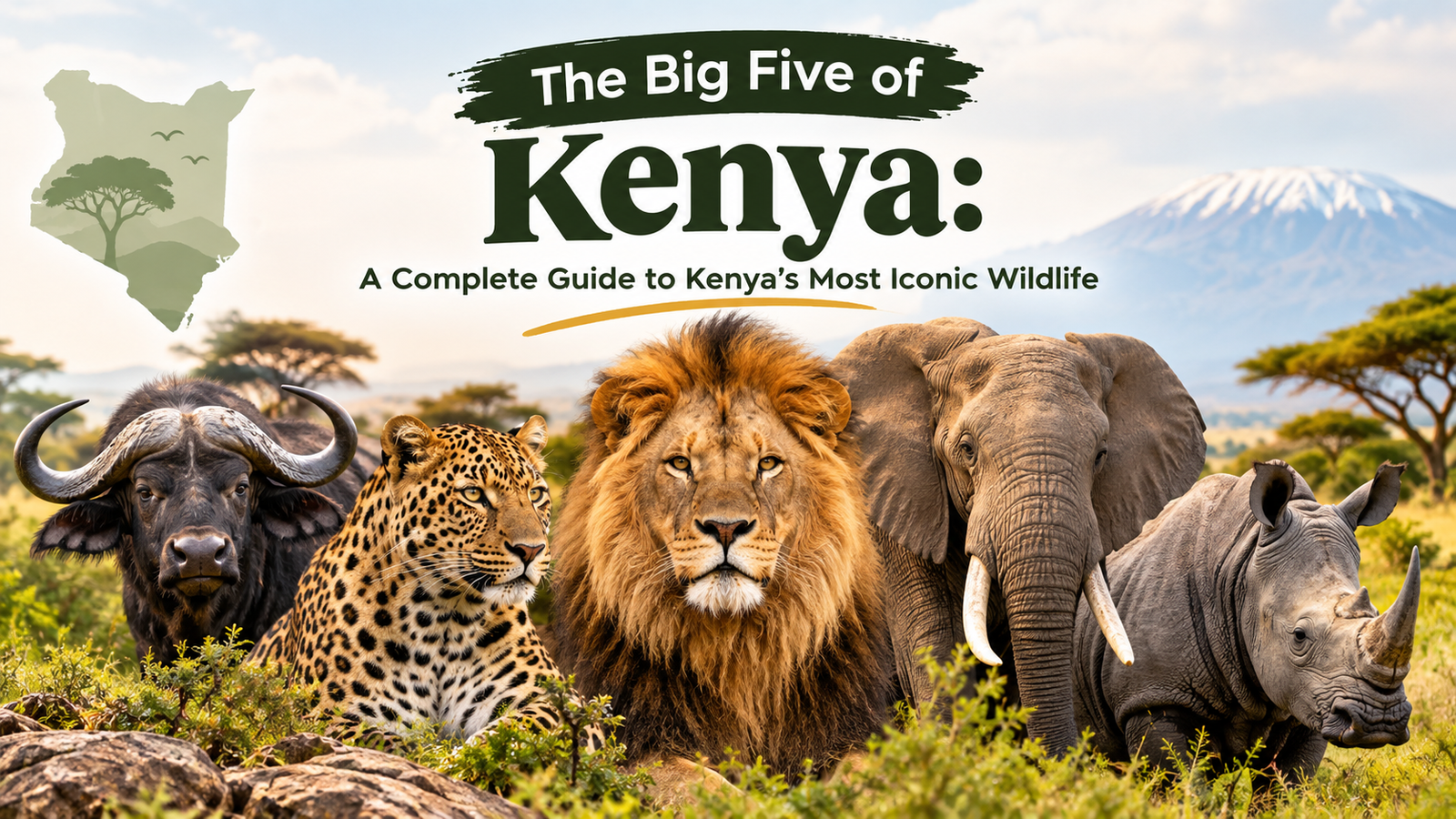
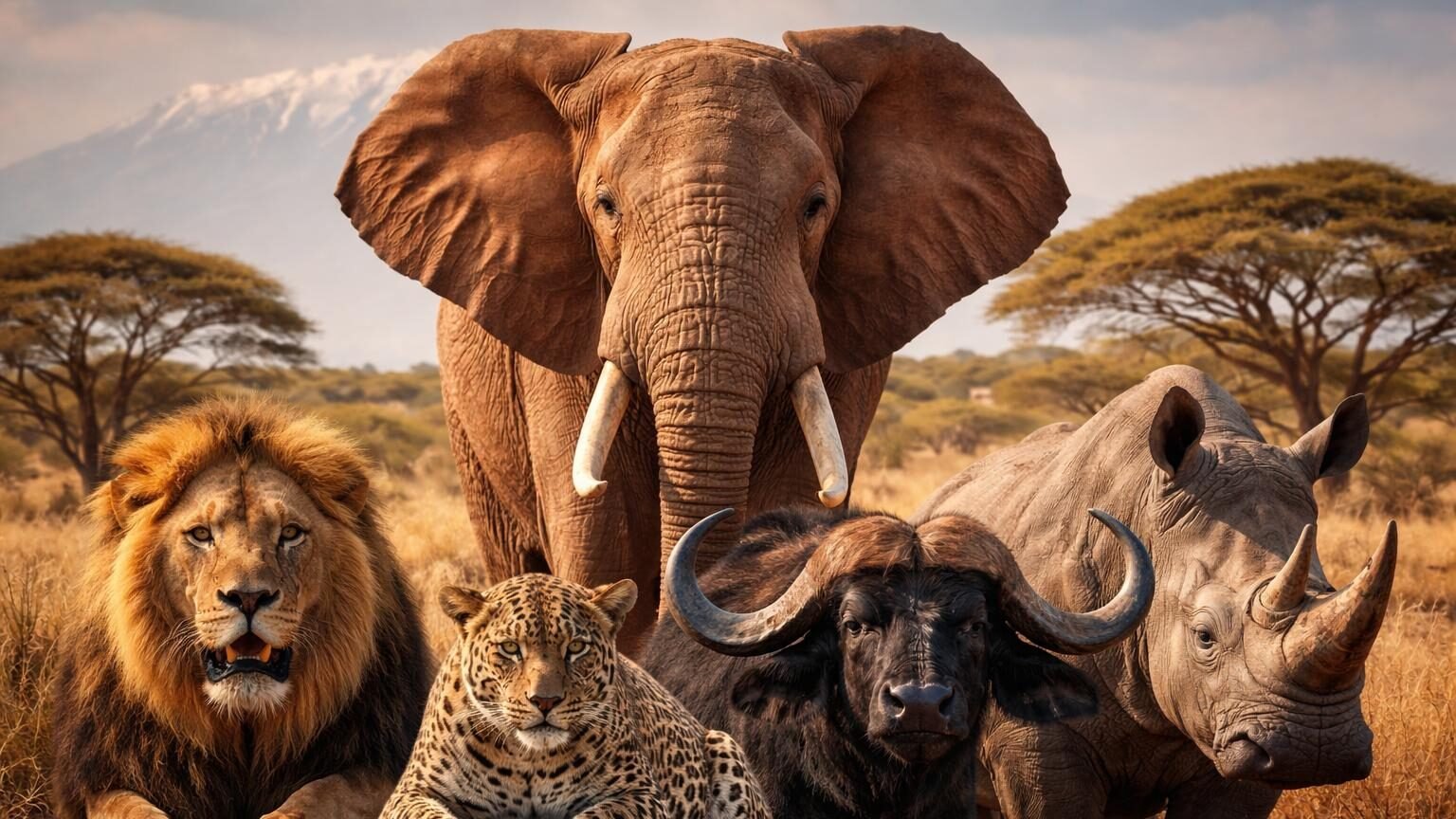
Among the hundreds of species you can encounter on a Kenyan safari, five animals have earned legendary status: the Lion, Leopard, Elephant, African Buffalo, and Rhinoceros. Together, they are known as the Big Five of Kenya.
But what makes these five animals so special? Where can you see them? And what should you know before planning your first Big Five safari?
Let’s explore.
What Are the Big Five of Kenya?
The term “Big Five” originally referred to five of Africa’s most challenging animals to hunt on foot: the lion, leopard, elephant, buffalo, and rhinoceros.
Today, thankfully, the term has a very different meaning for travellers. It represents some of Africa’s most iconic wildlife and the incredible experience of observing them in their natural habitat.
Kenya is particularly famous for Big Five safaris, with destinations such as Maasai Mara, Amboseli, Lake Nakuru, Tsavo, and other protected areas offering opportunities to encounter these remarkable animals. Kenya Wildlife Service highlights elephants, lions, rhinos, giraffes and buffalo among the country’s iconic wildlife.
1. The African Lion – The King of the Savannah
Few sights are as powerful as seeing a lion resting beneath an acacia tree or watching a pride move across the golden grasslands.
The African lion is perhaps the most recognisable member of Kenya’s Big Five. Lions are social animals and are often found living in prides consisting of related females, cubs and one or more males.
Where Can You See Lions in Kenya?
The Maasai Mara is one of Kenya’s most famous destinations for lion sightings. Its open grasslands provide excellent conditions for wildlife viewing.
You can also encounter lions in destinations including:
- Maasai Mara
- Amboseli National Park
- Tsavo East
- Tsavo West
- Nairobi National Park
- Meru National Park
Kenya Wildlife Service notes that Meru National Park has a healthy lion population alongside the other Big Five species.
Best Safari Experience
Early morning and late afternoon game drives can be particularly rewarding, when temperatures are cooler and wildlife activity can increase.
Safari tip: Don’t only look for lions sitting in the open. Your guide may spot them partially hidden in tall grass or beneath vegetation long before you do.
2. The African Elephant – Giants of the Wild
Standing beneath an enormous African elephant is an experience that is difficult to describe.
Elephants are among Kenya’s most iconic animals and can often be seen moving in family groups, feeding on vegetation or gathering around water sources.
Where Can You See Elephants in Kenya?
Amboseli National Park is especially famous for its elephant population and dramatic views of Mount Kilimanjaro.
Other excellent destinations include:
- Amboseli National Park
- Tsavo East
- Tsavo West
- Maasai Mara
- Meru National Park
Kenya Wildlife Service describes elephants as one of the country’s iconic species and highlights their presence across Kenya’s diverse protected landscapes.
Why Amboseli Is Special
Imagine watching a herd of elephants crossing the savannah with Mount Kilimanjaro rising in the background.
This combination of wildlife and landscape is one of the signature visual experiences of a Kenya safari.
3. The African Leopard – The Elusive Big Cat
If lions are the kings of the savannah, the leopard is the master of stealth.
Leopards are powerful, intelligent and remarkably difficult to spot. Their spotted coats provide excellent camouflage, allowing them to disappear into grass, bushes and trees.
One of the most exciting moments on safari is when your guide suddenly stops the vehicle and says:
“There’s a leopard.”
Everyone looks around.
At first, you may see nothing.
Then suddenly, you notice a pair of eyes or the outline of a spotted body hidden among the branches.
Where Can You See Leopards?
Leopards can be encountered in several Kenyan wildlife areas, including:
- Maasai Mara
- Samburu
- Tsavo
- Lake Nakuru
- Meru National Park
Because leopards are elusive, sightings are never guaranteed. That uncertainty is part of what makes finding one so exciting.
Safari Tip
Listen carefully to your guide. Experienced safari guides often notice tiny clues — tracks, alarm calls or unusual animal behaviour — that can lead to a leopard sighting.
4. The African Buffalo – Powerful and Unpredictable
The African buffalo may not receive as much attention as lions or elephants, but it is one of the most impressive members of the Big Five.
Large herds can create an incredible sight as hundreds of buffalo move across the grasslands.
Buffalo are powerful animals and should always be observed respectfully from a safe distance.
Where Can You See Buffalo in Kenya?
Buffalo are found in several Kenyan safari destinations, including:
- Maasai Mara
- Amboseli
- Lake Nakuru
- Tsavo
- Meru National Park
Kenya Wildlife Service lists Cape buffalo among the Big Five species found in Meru National Park.
What Makes Buffalo Special?
Their strength, herd behaviour and sheer size make them fascinating to watch.
During a game drive, you may see buffalo grazing peacefully. But when a herd begins moving together across the savannah, the scale of the experience can be spectacular.
5. The Rhinoceros – A Symbol of Conservation
The rhinoceros is one of Kenya’s most important wildlife species.
Seeing a rhino in the wild is not simply a memorable safari moment — it is also a reminder of the importance of conservation.
Kenya has made significant efforts to protect its rhino populations. Kenya Wildlife Service reports that conservation programmes have helped protect and recover rhino populations, while dedicated sanctuaries provide important protection for the species.
Where Can You See Rhinos in Kenya?
Some of the notable places for rhino experiences include:
- Lake Nakuru National Park
- Nairobi National Park
- Ol Pejeta Conservancy
- Meru National Park
- Tsavo conservation areas
Nairobi National Park is particularly remarkable because it offers wildlife viewing surprisingly close to the capital city and includes a rhino sanctuary.
Why Rhino Conservation Matters
Rhinos have faced severe pressure from poaching and habitat challenges.
Kenya’s conservation story demonstrates that protecting wildlife requires more than simply creating national parks. It involves rangers, conservation organisations, local communities, habitat management and long-term protection efforts.
For travellers, responsible tourism can help support the broader conservation ecosystem.
Where Is the Best Place to See the Big Five in Kenya?
There is no single location that guarantees every Big Five sighting.
However, several destinations are particularly well known for wildlife experiences.
Maasai Mara
The Maasai Mara is one of Kenya’s most iconic safari destinations.
Its open savannah landscapes support large populations of wildlife and provide excellent opportunities for game drives.
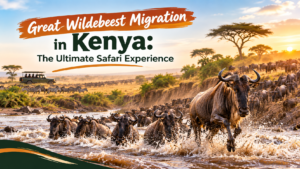
The region is also famous for the annual wildebeest migration, making it one of Africa’s most celebrated safari landscapes. Magical Kenya identifies the South Rift, including Maasai Mara and Amboseli, as a major Big Five safari region.
Amboseli National Park
Amboseli is famous for its elephants and spectacular views of Mount Kilimanjaro.
It is an excellent choice for travellers who want to combine wildlife encounters with dramatic landscapes.
Lake Nakuru National Park
Lake Nakuru provides a very different safari environment, combining wildlife with a beautiful lake and surrounding landscapes.
The park is also known for its rhino conservation importance.
Tsavo East & Tsavo West
Together, Tsavo’s protected landscapes offer vast wilderness and diverse scenery.
Tsavo West is known for attractions including Mzima Springs, volcanic landscapes and its rhino sanctuary, while the park is also home to the Big Five.
Meru National Park
For travellers looking for a less conventional safari experience, Meru offers an exciting combination of landscapes, wildlife and conservation.
Kenya Wildlife Service confirms that Meru is home to all five Big Five species and has a dedicated rhino sanctuary.
Can You See All Five Big Five Animals on One Safari?
Yes, it is possible — but there are no guarantees.
Wild animals move freely, and safari is not a zoo experience. A lion may be resting somewhere hidden, a leopard may remain inside thick vegetation, or rhinos may be far from your route.
That’s exactly what makes safari special.
Every game drive is different.
Your chances of seeing multiple Big Five species can improve by:
- Spending several days on safari
- Visiting wildlife-rich destinations
- Taking morning and afternoon game drives
- Travelling with experienced guides
- Combining different parks and conservancies
- Remaining patient during wildlife sightings
The goal shouldn’t simply be to “tick off” five animals.
The real experience is being present in the wilderness and watching animals behave naturally.
When Is the Best Time to See the Big Five in Kenya?
Kenya offers wildlife experiences throughout the year, although different seasons can create different safari conditions.
The dry seasons are often popular for wildlife viewing because animals may gather around available water sources and vegetation can be less dense.
The July to October period is particularly famous for the Great Wildebeest Migration in the Maasai Mara.
However, the best time for your safari depends on what you want to experience — wildlife viewing, migration, photography, landscapes, fewer crowds or budget considerations.
Why a Big Five Safari Is More Than Just Wildlife
A Kenya safari isn’t only about finding five animals.
It is about waking up before sunrise, watching the first light spread across the savannah, hearing birds call from the trees and following fresh tracks through the wilderness.
It is about seeing elephants walking across the horizon.
It is about the excitement of spotting a leopard hidden in the grass.
It is about watching a lion pride resting after a morning hunt.
And sometimes, it is simply sitting quietly and taking in the landscape.
That is the magic of Kenya.
Responsible Safari: Protecting Kenya’s Wildlife
A safari should always be about respecting the animals and the ecosystems that support them.
Kenya Wildlife Service emphasises conservation, protected-area management and community involvement as important parts of protecting Kenya’s natural heritage.
As a responsible traveller:
- Never feed wild animals.
- Follow your safari guide’s instructions.
- Maintain a safe distance from wildlife.
- Avoid loud noises around animals.
- Never attempt to leave the safari vehicle without permission.
- Do not purchase illegal wildlife products.
- Choose responsible safari operators and accommodations.
- Respect local communities and cultures.
Your journey can be both unforgettable and responsible.
Plan Your Kenya Big Five Safari with Travelexie
From the dramatic plains of Maasai Mara to the elephant-filled landscapes of Amboseli, Kenya offers a safari experience unlike anywhere else.
At Travelexie, we help travellers create thoughtfully planned Kenya journeys that combine wildlife, comfort, adventure and unforgettable experiences.
Whether you dream of seeing your first lion, photographing elephants beneath Mount Kilimanjaro, searching for the elusive leopard or witnessing rhinos in protected conservation areas, your Kenya adventure can be designed around the experiences that matter most to you.
Ready to Meet Kenya’s Big Five?
Your safari story is waiting.
Plan your Kenya journey with Travelexie and experience the wild heart of Africa.
Frequently Asked Questions
What are the Big Five in Kenya?
The Big Five are the lion, leopard, African elephant, African buffalo and rhinoceros.
Where is the best place to see the Big Five in Kenya?
The Maasai Mara is one of Kenya’s most famous Big Five safari destinations, while Amboseli, Lake Nakuru, Tsavo and Meru also offer excellent wildlife experiences.
Can I see all five Big Five animals during one safari?
Yes, it is possible, particularly on a multi-day safari visiting wildlife-rich areas. However, sightings are never guaranteed because these are wild animals.
Is Kenya good for first-time safari travellers?
Yes. Kenya offers a wide range of safari destinations, accommodation options and experienced safari operators, making it an excellent choice for a first African safari.
What is the best time for a Kenya safari?
Kenya offers safari experiences throughout the year. July to October is especially popular for the Maasai Mara’s wildebeest migration, while dry-season periods are often preferred for wildlife viewing.