Few safari encounters feel as powerful as watching an elephant herd move quietly through the African landscape. Massive yet remarkably graceful, elephants are among South Africa’s most iconic wildlife experiences. Seeing them in their natural environment offers more than a memorable photograph — it gives travellers a glimpse into one of Africa’s most fascinating and socially complex animal families.
Life in the Herd
African elephants are highly social animals, usually travelling in family groups led by an experienced female known as the matriarch. Herds may include mothers, calves, sisters and other related females, creating a strong and protective family structure.
Watching a herd move together can be captivating. The youngest calves often stay close to their mothers, while older members help maintain the group’s movement and awareness of its surroundings. Their communication is equally fascinating, involving a combination of vocalisations, body movements and subtle physical signals.
For safari travellers, these family interactions can be among the most rewarding parts of an elephant encounter.
Across Open Landscapes
Elephants are remarkably adaptable and can be found across a variety of South African environments. They may move through open grasslands, shaded woodlands, bushveld and areas surrounding rivers or waterholes.
Their daily movements are often closely connected to food and water. Elephants spend a significant part of their day feeding, using their trunks to gather grasses, leaves, branches and other vegetation. At water sources, a herd can become an unforgettable sight as adults drink, calves play and individuals interact around the water.
A quiet waterhole observation can offer especially beautiful safari moments, particularly when the surrounding landscape is illuminated by early morning or late afternoon light.
More Than Size
Their enormous presence can make elephants appear slow and uncomplicated, but they are intelligent and highly perceptive animals. Their trunks are extraordinary tools used for feeding, drinking, smelling, touching and interacting with their surroundings.
Their ears, tusks and distinctive movements make them instantly recognisable, while their social behaviour reveals another side of these remarkable animals.
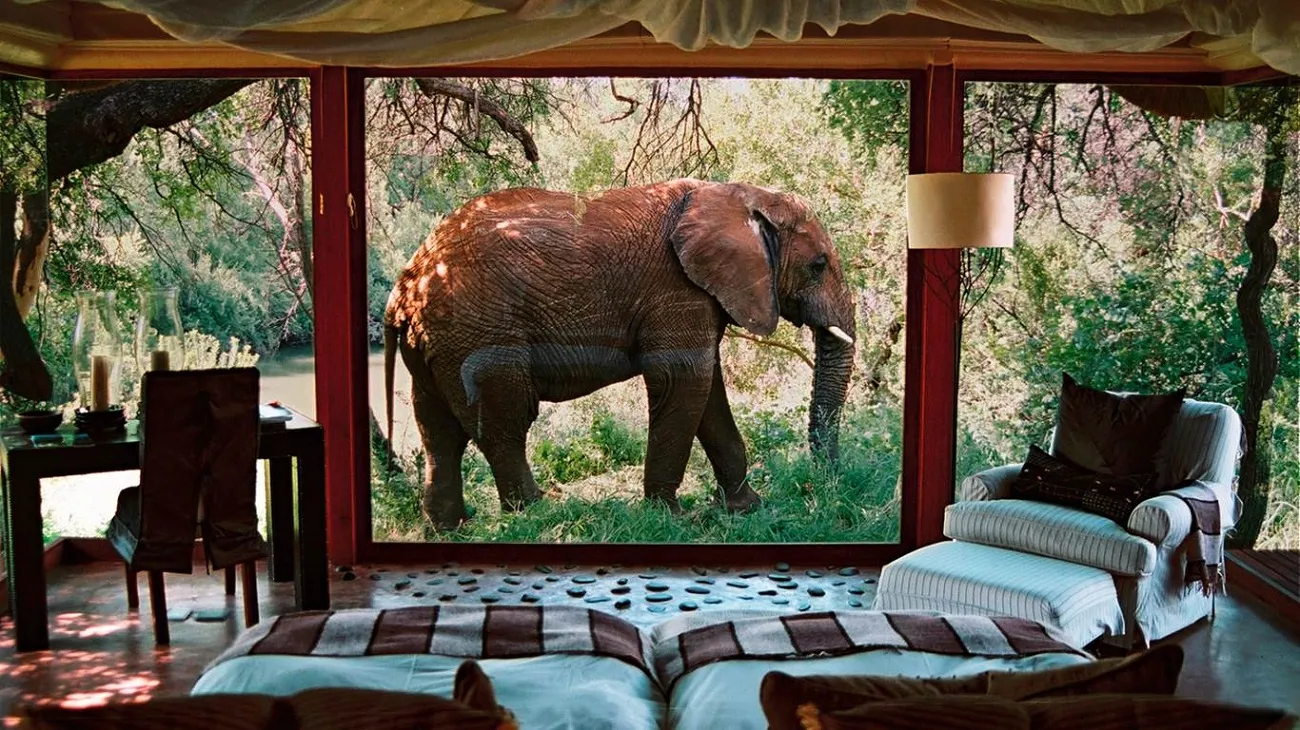
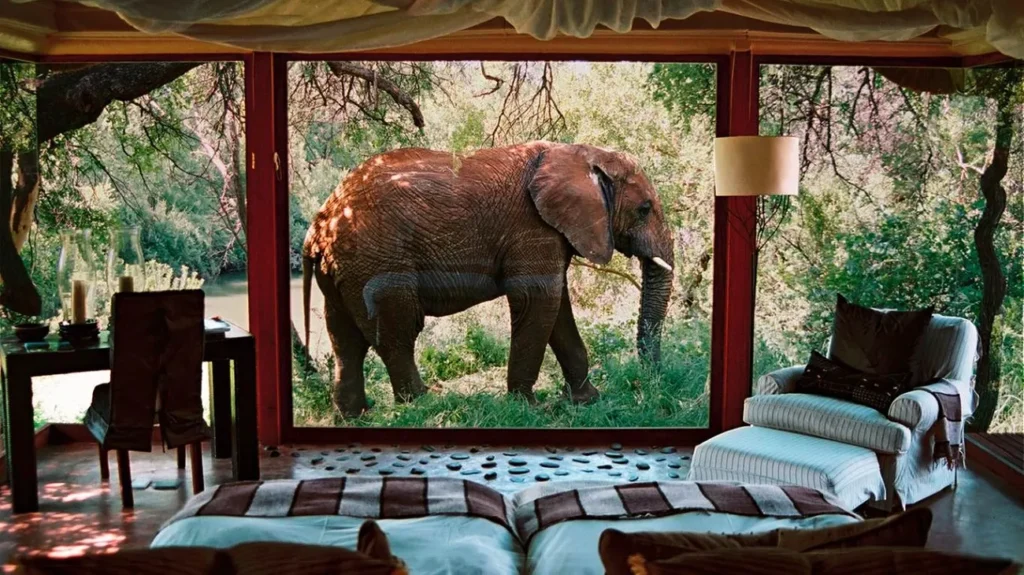
Every sighting can feel different. Sometimes a herd may cross the road in front of your vehicle, creating a dramatic encounter. At other times, elephants may simply appear in the distance, moving steadily across the landscape. The anticipation of watching their behaviour unfold is part of the experience.
A Safari Memory That Stays
An elephant encounter does not need to be dramatic to be unforgettable. The sight of a matriarch guiding her herd, a calf exploring beside its mother, or a group gathering peacefully at a waterhole can become one of the defining memories of a South African safari.
For travellers seeking a deeper connection with Africa’s wilderness, elephants represent the scale, family and rhythm of the continent’s natural world.
THE GIANT is not simply about seeing one of Africa’s largest animals. It is about slowing down, observing the herd and experiencing wildlife on its own terms — creating a safari moment that stays with you long after the journey ends.