Encountering a rhinoceros in the wild is one of the most memorable experiences a traveller can have in South Africa. Powerful, prehistoric in appearance and deeply connected to the continent’s conservation story, rhinos represent both the ancient character of Africa’s wildlife and the importance of protecting its remaining natural habitats.
For safari travellers, seeing a rhino is not simply about observing a large animal. It is an opportunity to experience one of Africa’s most recognisable species within the protected landscapes where conservation efforts continue to play an essential role.
A Living Link to the Past
The rhinoceros has a remarkable presence. Its thick skin, distinctive horns and immense physical strength give it an almost prehistoric appearance, making it easy to understand why the animal is often associated with an ancient world.
Despite their imposing size, rhinos can display surprisingly calm behaviour when moving through their natural surroundings. They may spend hours grazing, walking slowly through open areas or resting beneath the shade of trees.
During a safari, these quieter moments can be just as fascinating as a dramatic sighting.
Life Across Protected Landscapes
South Africa is home to important rhinoceros populations across a number of protected conservation areas and private reserves. Their habitats can include grasslands, bushveld and woodland landscapes, where they move in search of food, water and suitable resting areas.
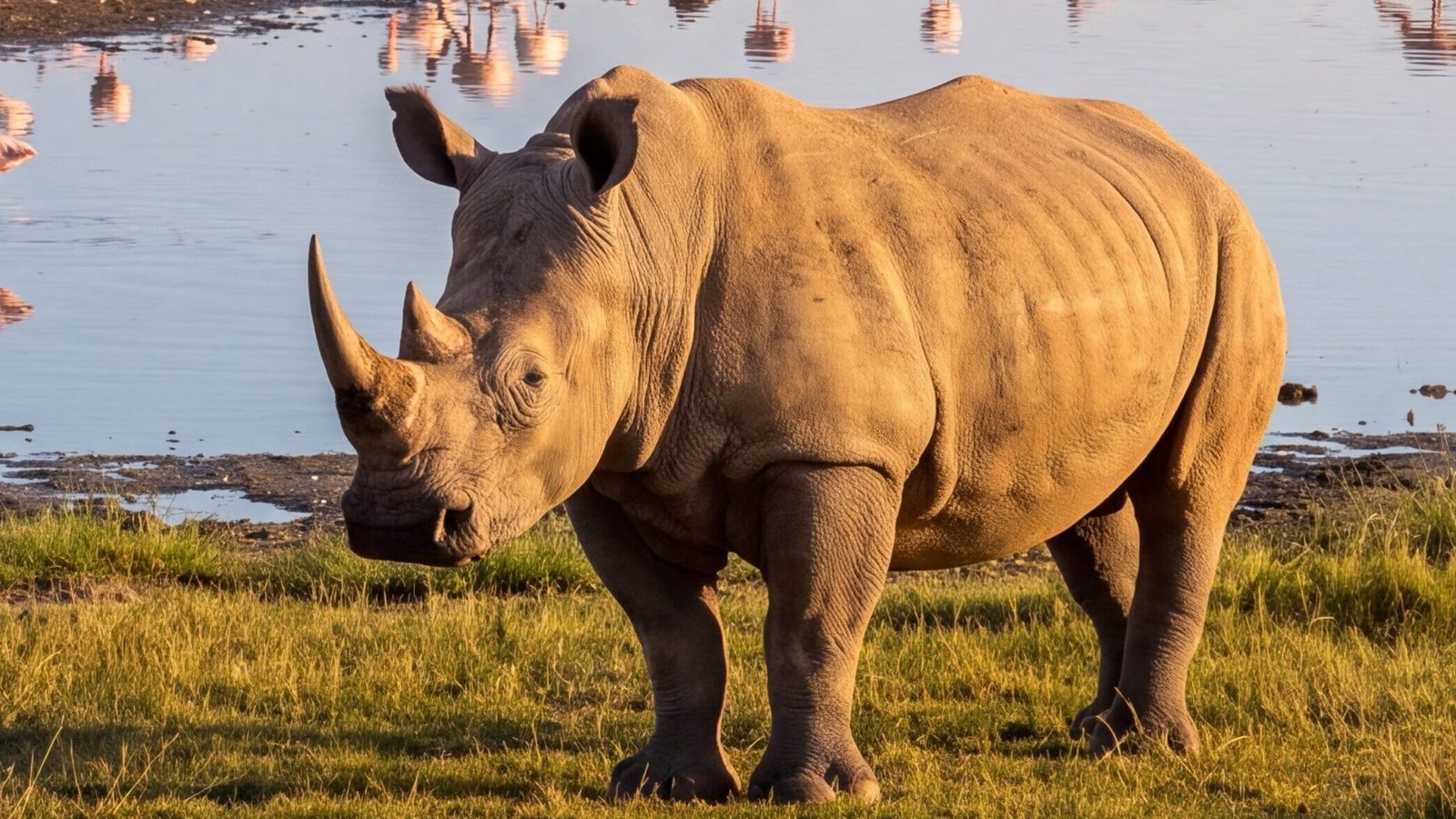
White rhinos are predominantly grazers, often spending considerable time feeding on grasses. Their broad, specialised mouths are particularly suited to grazing, creating a distinctive sight as they move steadily across open landscapes.
A rhino encountered near a waterhole can create an especially memorable safari scene, with the animal’s powerful silhouette set against the surrounding wilderness.
The Rhino Experience
A rhino sighting can be wonderfully unpredictable. You may discover one standing quietly in the distance, observe a mother with her young, or watch an individual slowly crossing an open track.
Safari vehicles provide an opportunity to observe without interrupting the natural rhythm of the landscape. The experience is often about patience — giving the animal space while allowing its behaviour to unfold naturally.
For photographers, rhinos can also create striking compositions. Their textured skin, distinctive profile and powerful form contrast beautifully with the open grasslands and golden light often found during early morning or late afternoon game drives.
A Symbol of Conservation
Rhinos also carry a deeper significance within African conservation. Their populations have faced severe pressure from illegal poaching, making protection and habitat conservation vital to their future.
Responsible safari tourism can contribute to the wider conservation ecosystem by supporting protected areas, local communities and wildlife management initiatives. For travellers, this adds another dimension to the experience: the privilege of seeing these animals is connected to the ongoing effort to safeguard them.
An Encounter to Remember
The beauty of a rhino encounter lies in its simplicity. Watching an ancient-looking animal move through its natural environment can make the surrounding wilderness feel timeless.
THE ANCIENT represents more than the physical strength of the rhinoceros. It reflects a species that has endured for millions of years and remains an extraordinary part of South Africa’s natural heritage.
To encounter a rhino in a protected landscape is to witness a powerful connection between wildlife, wilderness and conservation — a safari memory that can remain unforgettable long after the journey is over.