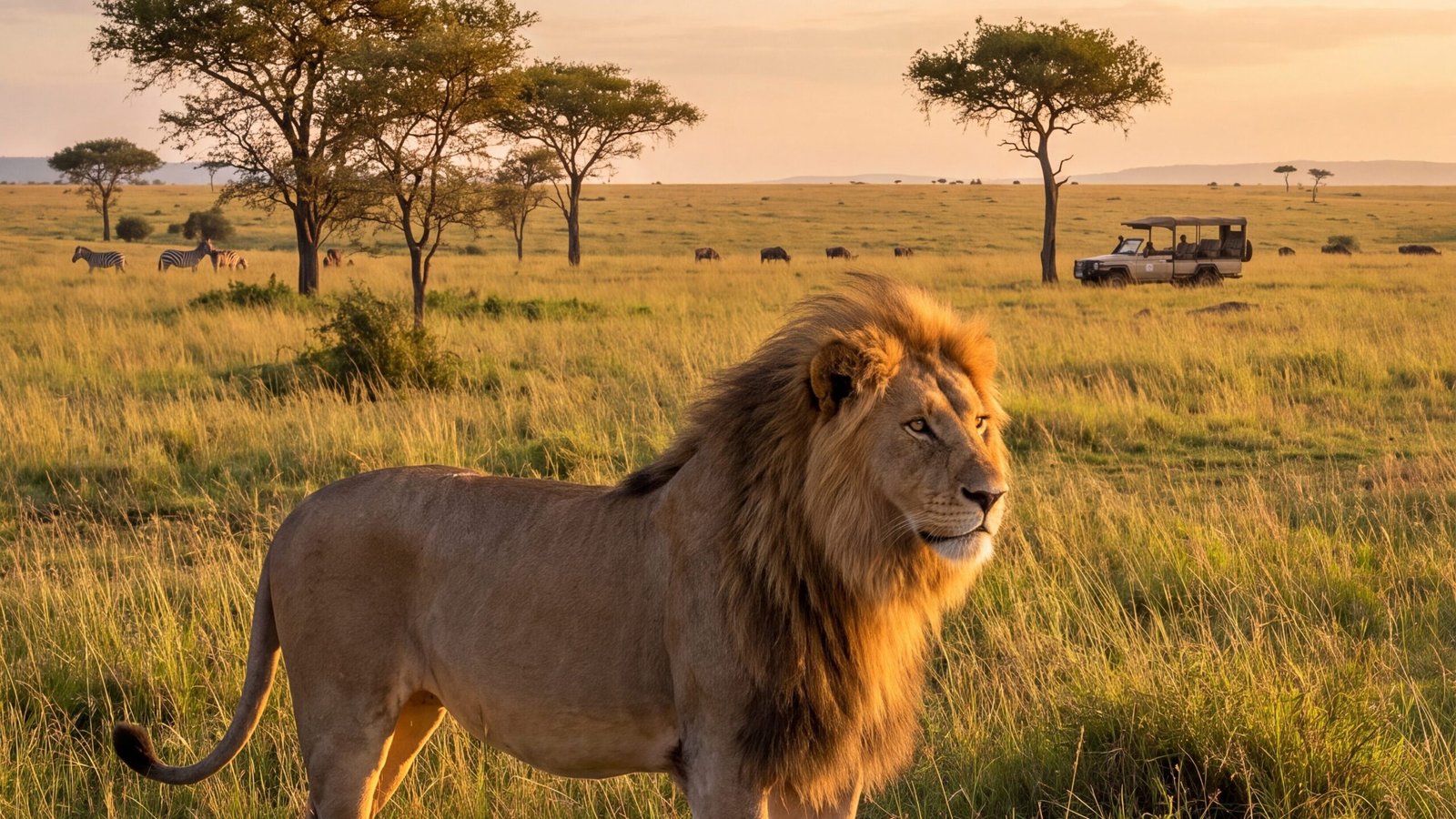
Few animals are as closely associated with the African wilderness as the lion. Powerful, social and instantly recognisable, lions are one of the most memorable sights on safari. Seeing them in their natural environment offers a very different experience from simply seeing them in photographs or documentaries.
Known scientifically as Panthera leo, lions are highly social big cats and are often seen living in groups known as prides. Their behaviour, interactions and presence make every sighting unique.
A Social Big Cat
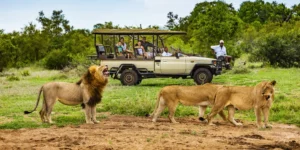
Unlike many other big cats, lions are strongly social animals. A pride can include related females, their young and one or more adult males.
Lionesses often form the core of the pride and may cooperate in raising cubs and hunting. The social structure of the group creates fascinating opportunities to observe communication, play, resting and interactions between individuals.
Watching a pride together can reveal a side of lions that is easy to miss when thinking only about their reputation as powerful predators.
Life on the African Plains
Lions spend a considerable amount of time resting, particularly during the heat of the day. Early mornings and late afternoons can therefore be especially interesting periods for safari sightings.
As temperatures become cooler, lions may become more active. You might see individuals moving through the grasslands, interacting with members of their pride or preparing for a hunt.
Every encounter is different, and there is never a guarantee of what behaviour you will witness.
The Art of the Hunt
Lions are skilled predators and can work together when hunting. Lionesses often play an important role in coordinated hunts, using teamwork and positioning to approach potential prey.
However, hunting is only one part of their daily life. Much of a lion’s time is spent resting, socialising and caring for young.
This contrast between intense moments of action and long periods of calm is part of what makes observing lions so fascinating.
Watching Cubs Grow
Lion cubs bring another dimension to a safari experience. Young cubs can often be seen playing, exploring their surroundings and interacting with other members of the pride.
These early experiences help them develop important skills while strengthening social bonds within the group.
For visitors, observing cubs at a respectful distance can be an especially memorable wildlife encounter.
A Defining Safari Experience
Spotting a lion in the wild is often one of the moments travellers remember most from their safari. The sight of a lion resting beneath a tree, walking across an open plain or watching its surroundings can create a powerful sense of connection with the wilderness.
The experience is not simply about seeing a famous animal. It is about observing natural behaviour in a landscape where the animal belongs.
Meet the King
The lion represents many of the qualities people associate with Africa’s wilderness—strength, social bonds, survival and adaptability.
From powerful adults to playful cubs, every pride has its own story. A safari offers the opportunity to witness these animals in their natural environment and appreciate them not just as an iconic symbol, but as complex social predators within a larger ecosystem.
Panthera leo · THE KING · SOCIAL · POWERFUL · ICONIC