Quiet, elusive and remarkably adaptable, the leopard is one of Africa’s most fascinating predators. Known scientifically as Panthera pardus, leopards are often difficult to spot, which makes an unexpected sighting feel particularly special.
Unlike lions, leopards are generally solitary animals. They move quietly through their surroundings, using vegetation, rocks and trees to remain concealed while watching the landscape around them.
For safari travellers, finding a leopard can become one of those unforgettable moments that stays with you long after the journey ends.
A Master of Disguise
One of the leopard’s greatest strengths is its ability to remain hidden. Its patterned coat blends naturally with many different environments, allowing it to move through grass, woodland and rocky landscapes without drawing much attention.
A leopard may be sitting quietly beneath vegetation, resting in the shade or moving through the landscape almost unnoticed.
This makes safari sightings very different from spotting larger animals in open areas. Sometimes, the first clue is simply a movement in the distance or the trained eye of an experienced guide.
A Solitary Life
Leopards generally prefer a solitary lifestyle, with individuals maintaining their own territories. Mothers and cubs remain together while the young are dependent, but adults typically spend much of their lives alone.
This solitary nature contributes to the rarity and excitement of sightings. Unlike a large pride of lions, a leopard can appear and disappear almost silently.
A brief encounter may therefore feel like a private glimpse into the life of an animal that prefers to remain unseen.
At Home in the Trees
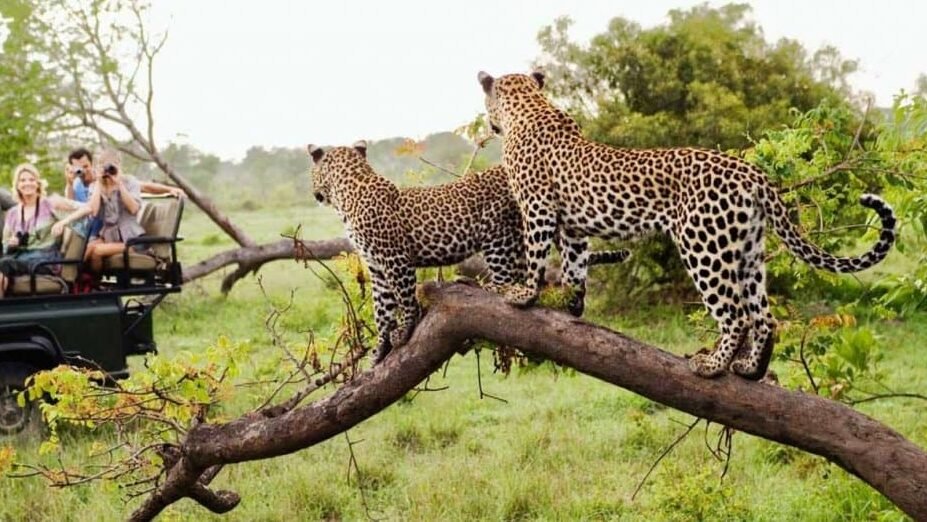
Leopards are excellent climbers and are often associated with trees. They may rest on strong branches, use elevated positions to observe their surroundings or retreat into the trees with prey.
Seeing a leopard resting high above the ground can be an extraordinary safari sight, particularly when its spotted coat contrasts against the branches and sky.
Their climbing ability also highlights the remarkable adaptability of this predator.
Patient and Opportunistic
Leopards are patient hunters and highly adaptable predators. They can hunt a variety of prey depending on what is available within their environment.
Rather than relying entirely on speed, they often use stealth, patience and carefully chosen opportunities.
Their ability to adapt to different habitats and food sources has helped them survive across a wide range of environments.
The Reward of Patience
Leopard sightings often remind safari travellers that wildlife experiences cannot be rushed.
You may spend time searching an area without seeing anything, only for a leopard to suddenly appear between the trees or cross the road ahead of you.
That element of uncertainty is part of the magic. The search itself becomes part of the experience, making the eventual sighting even more rewarding.
Meet the Shadow
The leopard represents another side of the African wilderness—quiet, independent and remarkably elusive.
A lion may announce its presence, but a leopard can remain almost invisible until the perfect moment.
For those fortunate enough to encounter one in the wild, the experience can feel like discovering a secret hidden within the landscape.
Panthera pardus · THE SHADOW · ELUSIVE · ELEGANT · SOLITARY