Cape Town + Safari: Where Romance Meets the Wild

Some journeys are memorable because of where you go. Others stay with you because of how you experience them together. A Cape Town and safari escape brings both together, combining the energy of the city with beautiful stays, scenic landscapes and intimate moments in the African wilderness.

For couples looking for a romantic South Africa experience with a touch of adventure, this combination offers an ideal balance between discovery, relaxation and time together.

Begin in Beautiful Cape Town

Your journey begins in Cape Town, a city surrounded by mountains, coastline and some of South Africa’s most spectacular scenery.

Spend your first days discovering the city at a relaxed pace. Take in the views from Table Mountain, explore the vibrant waterfront or enjoy a scenic drive along the Cape Peninsula. There is plenty to see, but the itinerary can also leave space for slow mornings, leisurely lunches and evenings together.

As the sun sets over the Atlantic, Cape Town creates the perfect beginning to a romantic escape.

Stay Somewhere Special

Where you stay is part of the experience. Beautifully selected hotels and intimate properties can give couples a comfortable base from which to explore the city.

After a day of sightseeing, return to a peaceful setting, enjoy a relaxed dinner or simply take time to unwind together.

The combination of thoughtful accommodation and a carefully paced itinerary allows you to enjoy Cape Town without feeling rushed.

Journey Into the Wilderness

After experiencing the city, the journey changes completely as you travel towards South Africa’s safari country.

The transition from urban landscapes to open wilderness creates a remarkable contrast. Suddenly, the sounds of the city are replaced by expansive landscapes, natural surroundings and the anticipation of seeing wildlife.

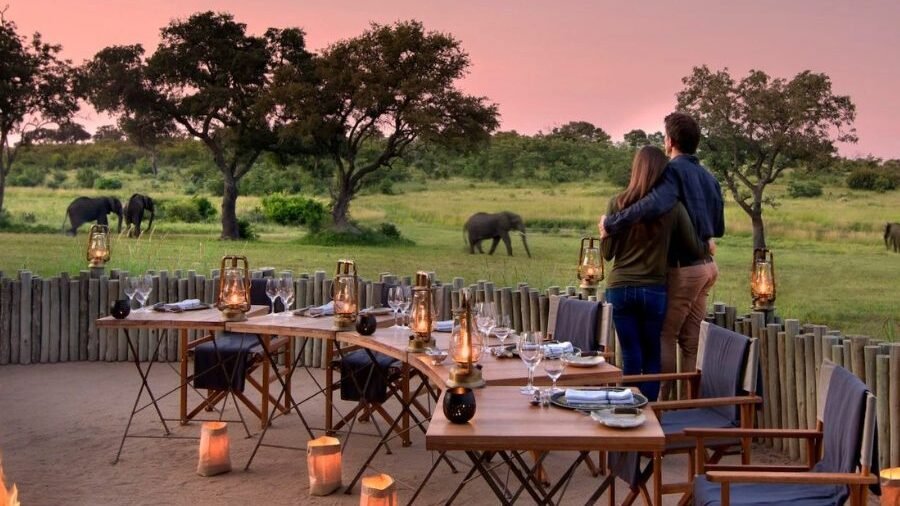
A safari stay gives couples the opportunity to experience this side of South Africa together, from early morning game drives to peaceful evenings surrounded by nature.

Intimate Safari Moments

Safari is not only about wildlife—it is about the atmosphere of being in the wilderness.

Watch the landscape come alive during an early morning drive, search for animals across the plains or enjoy the changing colours of the African sky as evening approaches.

Between game drives, take time to relax at your lodge and enjoy the surroundings. These quieter moments can become just as meaningful as the adventures themselves.

The Perfect Balance

What makes a Cape Town and safari journey special is the contrast between the two experiences.

Cape Town brings restaurants, culture, coastline and city energy. Safari brings open landscapes, wildlife and peaceful surroundings. Together, they create a journey that offers both excitement and relaxation.

You can spend one day exploring the city and the next watching wildlife in the wilderness—giving you two very different sides of South Africa within one romantic escape.

A Journey to Remember Together

Cape Town and safari create a beautiful combination for couples who want more than a traditional city break or a standalone safari.

With beautiful stays, scenic experiences, private moments and unforgettable wildlife encounters, the journey offers plenty of opportunities to slow down, explore and enjoy the experience together.

It is a romantic escape where city energy meets the wild—and every moment becomes part of your story.

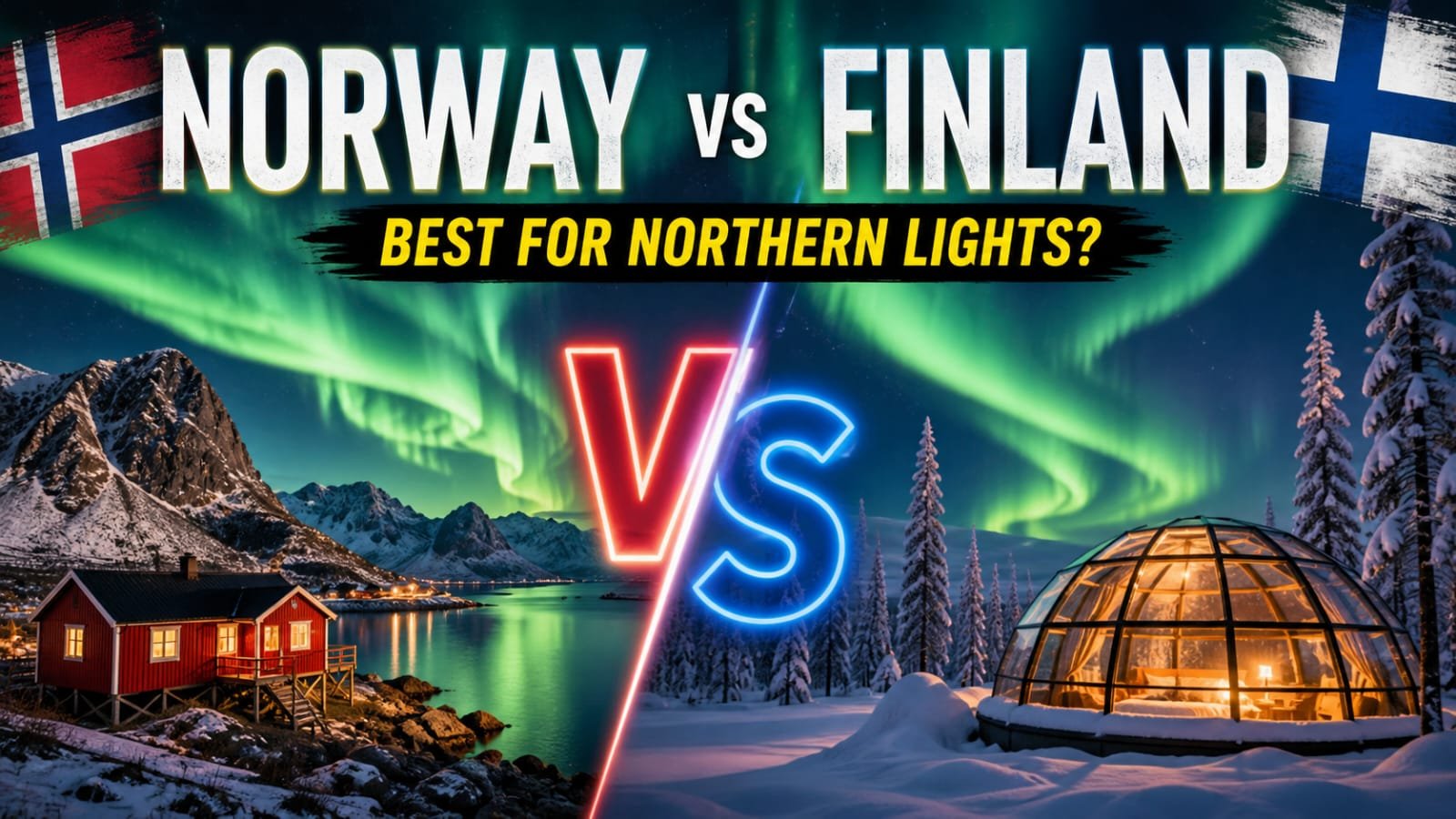
Norway vs Finland: Which Is Better for Your Northern Lights Trip?

If you’ve been researching a Northern Lights trip, chances are every itinerary you’ve seen so far has pointed you toward Rovaniemi in Finland. That’s still a completely solid choice. But 2025 saw a genuine shift in where Indian travellers were actually going for the aurora — Norway’s Tromsø, Lofoten Islands, and Bodø quietly became the surprise hit of the season, pulling travellers who wanted dramatic fjord scenery alongside their aurora hunt rather than snow-forest-and-igloo scenery alone. At Travelexie, we get asked “Norway or Finland?” almost as often as “when should I go?” — so here’s an honest, side-by-side answer.

The Short Version

Neither destination is objectively “better” — they suit different travellers. Finland (Rovaniemi) is the more built-out, family-friendly, first-timer-easy choice, with glass igloos, reindeer safaris, and Santa Claus Village giving it a more curated, all-in-one experience. Norway (Tromsø, Lofoten, Bodø) trades some of that polish for genuinely striking natural scenery — fjords, mountains, and the sea sitting right alongside your aurora viewing — and works well for travellers who want a more active, scenery-first trip rather than a cozier, packaged one.

Day-by-Day Sample Itineraries

Norway (Tromsø + Lofoten), 7 Nights

DayLocationWhat You’ll Do
1-2TromsøArrival, city orientation, Fjellheisen cable car for aurora-viewing vantage point
3TromsøEvening aurora chase by boat on the fjords with a guided operator
4Tromsø to LofotenScenic ferry crossing to the Lofoten Islands
5-6LofotenFishing village walks, rorbu cabin stay, mountain-and-fjord photography, evening aurora hunt
7Bodø (optional add-on)Saltstraumen tidal current visit, return flight connection

Finland (Rovaniemi + Levi), 7 Nights

DayLocationWhat You’ll Do
1-2RovaniemiArrival, Santa Claus Village, Arctic Circle crossing
3RovaniemiGlass igloo or aurora cabin stay, evening aurora watch
4RovaniemiReindeer and husky safari
5-6LeviSnowmobile safari, ski resort town, evening aurora chase
7RovaniemiSnowshoe trek, departure

Cost Comparison (Per Person, 7 Nights, Mid-Range)

Norway (Tromsø + Lofoten)Finland (Rovaniemi + Levi)
Flights + land package₹2,00,000 – ₹3,00,000₹1,80,000 – ₹2,60,000
Hotels (peak season)₹8,000 – ₹18,000/night₹7,000 – ₹15,000/night
Glass igloo / aurora cabin upgradeAvailable in Lofoten (rorbu cabins)Widely available and iconic in Rovaniemi
Meals₹1,500 – ₹3,000/day₹1,200 – ₹2,500/day

Norway generally runs slightly higher than Finland once you factor in Lofoten transfers and fjord excursions, but it’s still meaningfully cheaper than Iceland for a comparable trip.

Aurora Viewing: Which Actually Gives Better Odds?

Both destinations sit inside the auroral oval and offer genuinely strong viewing odds on clear nights between late September and March, with success rates typically in the 70-80% range over a multi-night stay in either location. Finland’s Rovaniemi and Levi are slightly more predictable in terms of clear-sky planning since the terrain is flatter, while Norway’s coastal weather can be more changeable — but Tromsø’s setting means that even a cloudy aurora night still delivers dramatic fjord and mountain views, which Rovaniemi’s flatter forest landscape doesn’t quite match.

Which Fits You Better

  • Choose Finland (Rovaniemi/Levi) if this is your first Arctic winter trip, you’re travelling with children, or you want the “complete package” experience — glass igloo, huskies, reindeer, Santa Claus Village — without needing to plan much yourself.
  • Choose Norway (Tromsø/Lofoten/Bodø) if you want a more active, scenery-driven trip, you’re comfortable with a bit more independent planning (Lofoten in particular benefits from a rental car or organized transfer), and fjord-and-mountain landscapes matter to you as much as the aurora itself.
  • Consider combining both on a longer Scandinavia itinerary if you have 10+ days and want the best of each — this is a route Travelexie can build as a single itemized package rather than two separate bookings.

Getting There from India Neither destination has a direct flight from India. Tromsø typically connects via Oslo, with onward connections through Amsterdam, London, or Frankfurt from major Indian metros. Rovaniemi is usually reached via Helsinki, similarly connecting through a European hub.Both routes require a Schengen visa, so plan for at least 3-4 weeks of processing time ahead of your travel dates — this applies whether you choose Norway or Finland, since both fall under the Schengen area.

Why Book With Travelexie

Norway and Finland itineraries are exactly where bundled quotes tend to hide the most — a Lofoten package might not specify whether the rorbu cabin upgrade or the fjord boat tour is included until you’re deep into planning, and a Rovaniemi quote might quietly leave out the aurora cabin supplement as a “surprise” add-on later. Travelexie itemizes every component of your Northern Lights package upfront — flights, hotel category, cabin or igloo upgrades, guided excursions, and visa costs are each priced separately, so you can compare Norway against Finland on a true like-for-like basis before deciding. The way Travelexie prices this trip, you’ll know exactly what you’re paying for the fjord boat tour versus the reindeer safari, not just one bundled number.

Practical Notes for Indian Travellers

  • Darkness: Both Tromsø and Rovaniemi see very limited daylight in December-January (Tromsø experiences near-zero direct sunlight at peak winter). If constant darkness affects your mood, consider September-October or February-March instead, when you still get strong aurora odds with more daylight.
  • Packing: Genuine Arctic layering matters more than one heavy coat — thermal base layers, insulated boots, and windproof outerwear for both destinations.
  • Food: Vegetarian options are more limited in smaller towns like Lofoten’s fishing villages than in Rovaniemi or Tromsø city center — Travelexie can flag vegetarian-friendly stops on your itinerary in advance.
  • Currency: Norway uses the Norwegian Krone, Finland uses the Euro — a prepaid multi-currency forex card covers both if you’re combining the two.

Ready to Plan Your Trip?

Whether Norway’s fjords or Finland’s cozier Arctic setup sounds like your trip, Travelexie can put together an itemized quote for either — or both, if you’d rather combine them into one longer Scandinavia itinerary. Get in touch and we’ll map out exactly what your Northern Lights winter looks like, cost by cost.

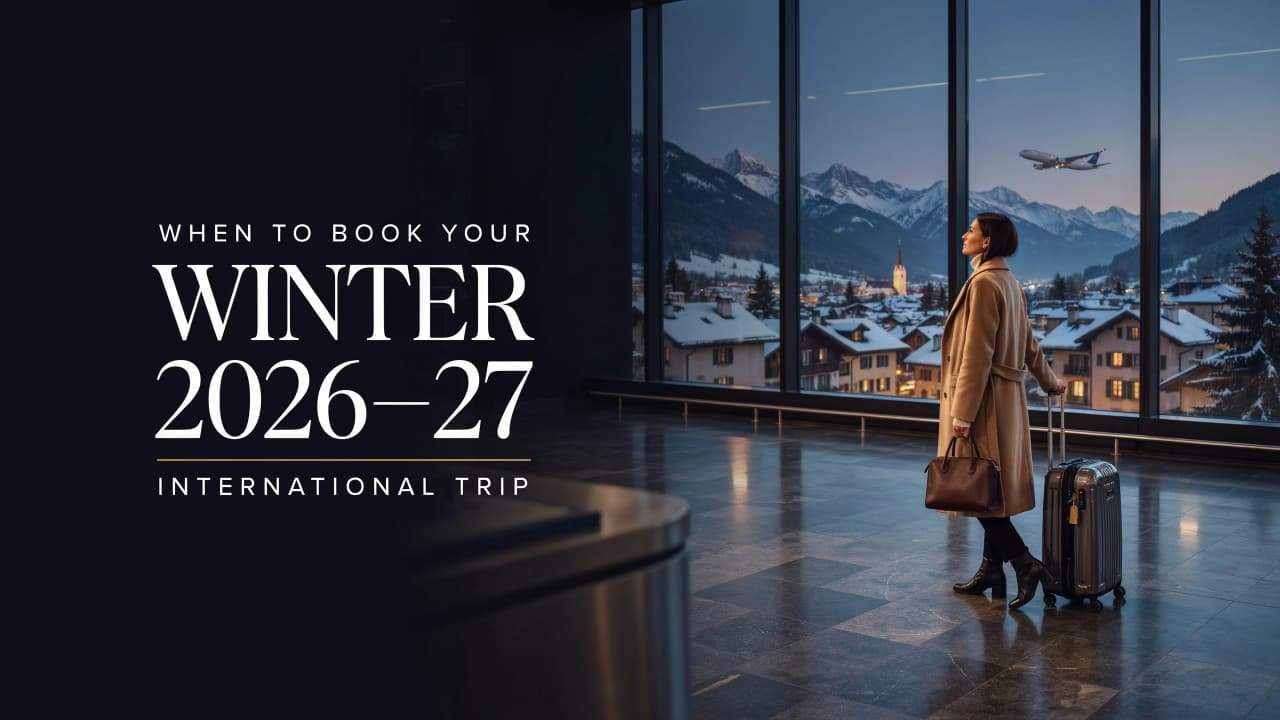
When to Book Your Winter 2026-27 International Trip & Where to Go

If you’re planning a winter 2026-27 international trip, whether it’s a Northern Lights trip, a Switzerland snow holiday, or a Dubai winter break for this November through February, the next six to eight weeks matter more than any other window in the year. Airfare and hotel rates for the December–January peak typically start climbing sharply once you’re inside the 8-week mark, and by early December, last-minute Christmas and New Year fares can run 40-80% higher than what you’d pay booking before the end of October. At Travelexie, this is the exact call we’re fielding right now from families locking in December school-holiday trips and couples planning a New Year getaway — so here’s a straight, destination-by-destination breakdown of when to book and what it costs.

When to Book Your Winter 2026-27 International Trip

Historically, booking your flights and package by October 31 for Christmas–New Year travel beats booking after December 1 by a wide margin — often 40% or more on the flight component alone. If your dates are flexible, travelling just before the peak (around December 14–19) or just after (January 5–10) can save you another 25-50% compared to flying over Christmas Day or New Year’s Eve itself. For most international routes from India — Europe, Japan, the Gulf — the general rule is to book 8 to 12 weeks ahead for a normal fare, and 12 to 16 weeks ahead if your travel dates fall inside the Diwali-to-New Year festive stretch. Since you’re reading this in late August, you’re sitting right in that ideal window for a Nov–Feb trip.

Northern Lights (Finland, Norway, Iceland)

Best booking window: Now through mid-September for December departures; book by October for January-February.

For a winter 2026-27 international trip, the Northern Lights are one of the most popular experiences for Indian travellers. The Aurora season runs roughly September through March, but December and January are when Indian travellers most commonly go, aligning with school holidays and year-end leave. Finland remains the most established choice for Indian travellers — Rovaniemi’s glass igloos and reindeer safaris are a known quantity — while Norway (Tromsø, Lofoten) has become a strong alternative for travellers who want fjords and aurora viewing in one trip without the Finland crowds. Iceland tends to be the most fare-sensitive of the three because of limited seat inventory on the routing through European hubs, so if Iceland is on your list, book earlier rather than later.

Typical cost from India (per person, land + flights, 6-7 nights): ₹1,40,000 – ₹2,20,000 depending on hotel category and whether you include a glass igloo or aurora cabin stay.

Switzerland Winter / Snow

Best booking window: Now through October for December departures; November for January.

Switzerland is one of the most popular choices for a winter 2026-27 international trip, especially for Indian honeymooners and families. snow-dusted Alps, the Jungfraujoch train, Christmas markets in Zurich and Basel, cozy chalet stays — remains one of the most consistently booked winter trips for Indian honeymooners and families alike. December sees the added pull of European Christmas markets, which pushes hotel rates up in the Interlaken and Lucerne belt specifically, so if that’s your priority, book your accommodation as early as possible.

Typical cost from India (per person, 7-8 nights, mid-range hotels): ₹1,80,000 – ₹2,80,000, higher if you’re adding a Jungfraujoch or Titlis excursion and premium rail passes.

Japan Winter & Illuminations

Best booking window: Now through September for December; this is the fastest-filling of the four. Japan’s winter season pairs snow in Hokkaido and the Japanese Alps with the country’s illumination season — Tokyo, Osaka, and Kyoto are all lit up with seasonal displays from November through early January. Indian arrivals to Japan have grown sharply over the past two years, and that demand is now showing up directly in flight and hotel pricing for the December–January window, so this is the destination where booking early makes the biggest financial difference. If your interest in Japan started with our Japan cherry blossom guide, winter is the quieter, equally striking counterpart — onsens, snow monkeys, and far thinner crowds at the major temples.

Typical cost from India (per person, 8-9 nights, mid-range hotels): ₹2,10,000 – ₹3,20,000.

Dubai Winter

Best booking window: More flexible than the others — book 4-8 weeks out is usually fine, except over the New Year week itself.

Dubai’s winter appeal is the weather more than a seasonal spectacle — pleasant daytime temperatures make it the easiest short-haul winter break from India, and it’s the one destination on this list where you don’t need to book months in advance unless you’re specifically travelling over December 30–January 2. That window does spike hard due to Dubai’s New Year fireworks and events calendar, so if New Year’s Eve in Dubai is the plan, book that specific week now.

Typical cost from India (per person, 5 nights, mid-range hotel): ₹65,000 – ₹1,10,000, rising to ₹1,50,000+ if your dates include December 31.

Why Book With Travelexie

Every one of the cost ranges above hides a common trap: quotes from many operators bundle the flight, hotel, and “sightseeing” into one number without specifying what’s actually included, so a Switzerland quote might quietly exclude the Jungfraujoch train ticket, or a Northern Lights package might leave out the aurora cabin supplement until after you’ve paid a deposit. Travelexie itemizes every winter package line by line — flights, hotel category, park or excursion entry fees, visa costs, and meals are each shown separately, so you know exactly what ₹2,10,000 for Japan or ₹1,80,000 for Switzerland is actually paying for before you commit. The way Travelexie prices this trip, there’s no post-booking “oh, that wasn’t included” conversation.

Practical Notes for Indian Travellers

Packing: For Northern Lights and Japan winter trips, thermal layering matters more than one heavy coat — pack for -15°C to -20°C wind chill in Lapland or Hokkaido specifically.

Visas: Japan, Switzerland (Schengen), and Iceland/Norway/Finland (also Schengen for most) require advance visa applications — plan for 3-4 weeks of processing time on top of your booking window. Dubai offers visa-on-arrival for most Indian passport holders.

Currency: Carry a mix of a prepaid forex card and a no-foreign-transaction-fee card; Japan in particular is still cash-heavy outside major cities.

Vegetarian food: Switzerland and Dubai are easy for vegetarian travellers; Japan requires more planning — Travelexie can flag vegetarian-friendly restaurants along your itinerary on request.

Ready to Plan Your Trip?

If any of these four are on your list for this winter, the smartest first step is getting a quote locked in before fares move further. Reach out to Travelexie and we’ll put together an itemized quote for your dates — no bundled pricing, no surprises later — so you know exactly what your winter trip costs before you book anything.

Business visa vs tourist visa comparison showing key differences for international travellers

Business Visa vs Tourist Visa: Key Differences You Must Know

Quick Answer: Business Visa vs Tourist Visa

Tourist Visa:

For leisure travel such as sightseeing, holidays, visiting friends or family, and short-term recreation.

Business Visa:

For professional activities like meetings, conferences, trade fairs, client visits, negotiations, or exploring business opportunities. 

Q: Do I need a business visa if my trip is for work, but I am not being paid?

If your trip has a work-related purpose, even if it is unpaid, you typically require a business visa.

What Is a Tourist Visa?

A tourist visa allows you to enter a foreign country strictly for non-business purposes.

Common reasons to apply for a tourist visa

  • Holidays and sightseeing
  • Visiting friends or relatives
  • Short personal trips
  • Cultural or leisure activities

What you cannot do on a tourist visa

  • Attend official business meetings
  • Sign contracts
  • Participate in trade events
  • Conduct market research

Many visas get rejected because applicants casually mention business-related activities while applying for a tourist visa.

What Is a Business Visa?

A business visa is issued to travellers who are visiting another country for professional or commercial reasons, without joining the local workforce.

Common reasons to apply for a business visa

  • Client meetings or negotiations
  • Trade shows and exhibitions
  • Conferences and seminars
  • Exploring partnerships or investments

Travelexie regularly assists professionals and companies with business visa applications, documentation, and embassy coordination through its dedicated visa support services.

Business Visa vs Tourist Visa: Side-by-Side Comparison

FactorTourist VisaBusiness Visa
PurposeLeisure and personal travelProfessional activities
Allowed activitiesSightseeing, visitsMeetings, events, negotiations
EmploymentNot allowedNot allowed
DocumentationSimpleMore detailed
Invitation letterUsually not requiredOften mandatory
Approval scrutinyLowerHigher

Documentation Differences You Should Know

This is where most applicants get confused.

Tourist visa documents usually include

  • Passport and photographs
  • Travel itinerary
  • Hotel bookings
  • Return flight tickets
  • Proof of funds

Business visa documents usually include

  • Invitation letter from overseas company
  • Cover letter from Indian employer
  • Company registration documents
  • Purpose-of-visit explanation
  • Financial and travel proof

Because of these extra checks, business visa processing needs careful handling. This is where professional visa assistance becomes valuable, especially for first-time applicants.

Q: Can I attend a business meeting on a tourist visa?

No. Most countries strictly separate leisure travel from business activities. Even for a single, informal meeting, you generally need a business visa.

Which Visa Has a Higher Approval Chance?

Approval depends on intent clarity and documentation, not just visa type.

  • Tourist visas are simpler and often approved faster
  • Business visas are approved when the documentation is strong, and the purpose is clear

Working with experienced visa consultants, such as Travelexie, helps avoid errors that can lead to rejection, especially for business travel where embassy scrutiny is stricter.

When Should You Apply for a Business Visa Instead of a Tourist Visa?

Apply for a business visa if:

  • Your travel is linked to your job or company
  • You are attending professional events
  • You’re representing a business or brand
  • You’re exploring overseas partnerships

If the trip benefits your career or organization, it’s business travel, even if you plan sightseeing later.

How Travelexie Helps with the Right Visa Choice

Visa rejection costs time, money, and future opportunities. Travelexie offers end-to-end visa assistance including:

  • Business visa support
  • Tourist visa filing
  • Document verification
  • VFS appointment guidance
  • Fast-track visa assistance

You can explore our complete visa services directly on our website and get expert guidance based on your travel purpose.

Final Thoughts

The difference between a business visa and a tourist visa isn’t paperwork; it’s intent.
Applying under the wrong category can undo even a well-planned trip.

Be honest about why you’re travelling. Match your purpose to the correct visa. And if you’re unsure, get professional advice before applying.

Choosing the right visa is the first step to a smooth international journey. 💫✈️