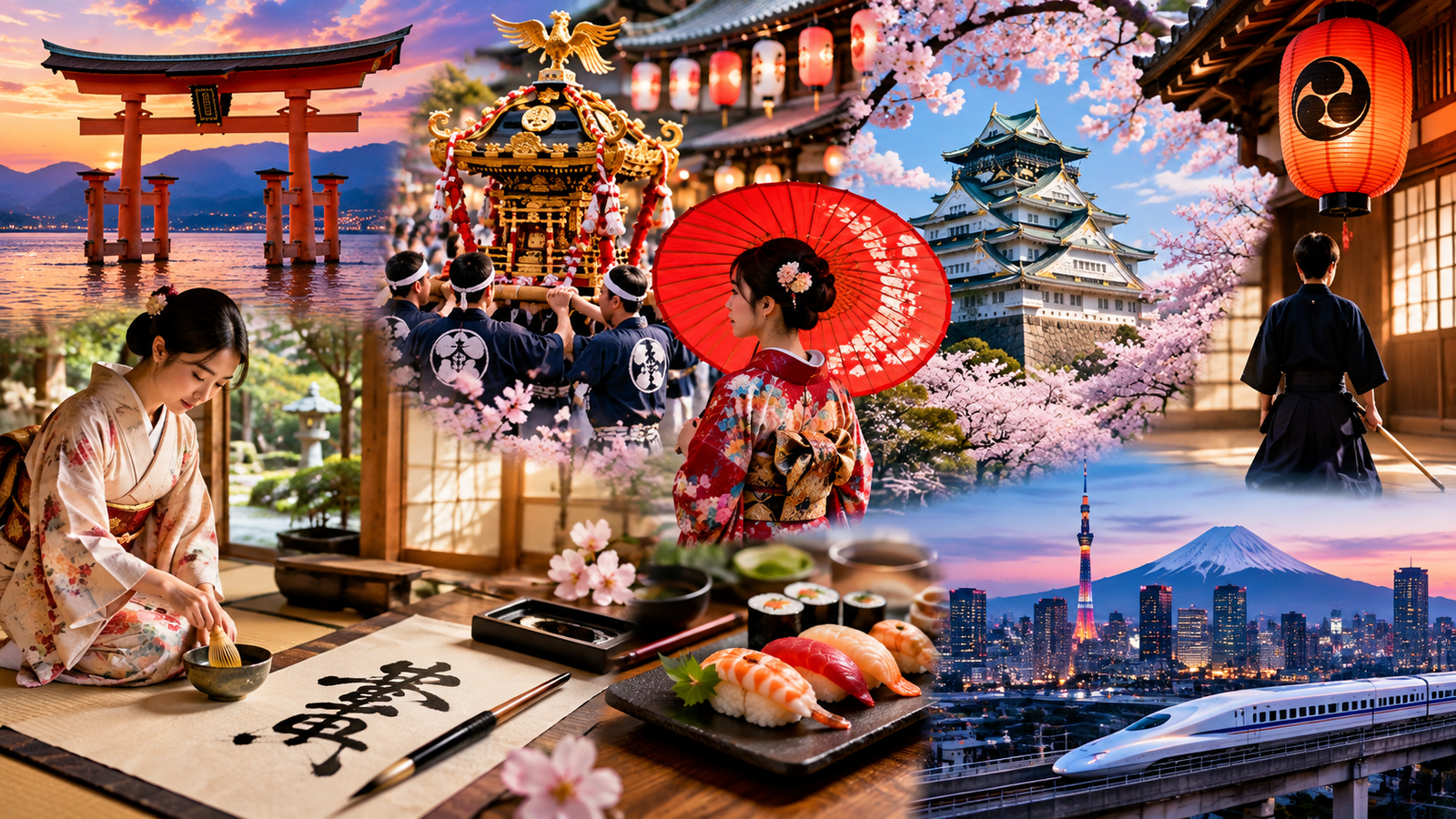
10 Fascinating Japanese Traditions That Still Shape Modern Japan

Japan is often described as a country where the past and future exist side by side.

In one moment, you can find yourself surrounded by skyscrapers, bullet trains and cutting-edge technology. A short journey later, you may be standing in front of a centuries-old temple or walking through a quiet traditional neighbourhood.

What makes Japan particularly fascinating is that its traditions have not simply disappeared with modernisation. Many continue to influence everyday life.

Here are 10 Japanese traditions and cultural practices that remain an important part of modern Japan.

1. The Art of Bowing

Bowing is one of the most recognisable aspects of Japanese culture.

It can be used when greeting someone, showing appreciation, apologising or expressing respect.

The depth and duration of a bow can vary depending on the situation and level of formality.

For visitors, understanding this simple cultural practice offers an introduction to the importance Japan places on respect and social etiquette.

2. The Philosophy of Omotenashi

Omotenashi is often translated as Japanese hospitality.

But the idea goes beyond simply providing good service.

It is about anticipating the needs of another person and creating a thoughtful experience without necessarily expecting anything in return.

You can see elements of this philosophy in hotels, restaurants, shops and traditional Japanese hospitality.

3. The Japanese Tea Ceremony

The Japanese tea ceremony, known as chanoyu or sado, is much more than drinking tea.

It combines preparation, movement, hospitality and mindfulness.

Every element—from the utensils to the surroundings—can have cultural meaning.

For travellers, experiencing a traditional tea ceremony can provide a glimpse into a slower and more deliberate side of Japanese culture.

4. Removing Shoes Indoors

Visitors will often notice that shoes are removed before entering certain homes, traditional accommodations and other spaces.

This practice is closely connected with cleanliness and respect for indoor spaces.

Traditional Japanese homes often have a clear distinction between outdoor and indoor environments, making the custom an important part of everyday etiquette.

5. Onsen Culture

Japan’s hot springs, known as onsen, have been part of Japanese culture for centuries.

For many people, visiting an onsen is not simply about relaxation. It is also a cultural experience.

Visitors should understand the basic etiquette before entering, including washing before entering the bath and following the rules of the individual facility.

A peaceful onsen experience can be one of the most memorable parts of a Japan journey.

6. Seasonal Festivals

Japan’s calendar is filled with festivals and seasonal celebrations.

From colourful summer festivals to traditional New Year customs and autumn celebrations, these events connect communities with local history and nature.

Cherry blossom season is perhaps the most internationally famous example, but every season offers its own cultural experiences.

7. Respect for Nature

Japan’s traditional culture has a deep connection with nature.

This can be seen in gardens, temples, seasonal celebrations and traditional architecture.

The changing seasons often play an important role in Japanese aesthetics.

Spring flowers, summer greenery, autumn colours and winter landscapes each create their own atmosphere.

8. Traditional Japanese Architecture

Even in modern cities, traditional architectural influences remain visible.

Wooden structures, sliding doors, tatami rooms, gardens and minimalist interiors can still be found in historic neighbourhoods, temples, ryokans and cultural sites.

Visiting Kyoto, Nara or other historic areas provides an opportunity to experience this side of Japan.

9. Traditional Food Culture

Japanese cuisine is deeply connected with seasonality, presentation and local ingredients.

Sushi and ramen may be globally famous, but Japan’s culinary world goes far beyond them.

Regional dishes, traditional sweets, seasonal ingredients and carefully prepared meals reveal how food can become an expression of culture.

For travellers, exploring Japanese food can be a journey in itself.

10. The Concept of “Mottainai”

The Japanese word mottainai expresses a sense of regret over waste and encourages appreciation for resources.

The idea reflects a broader cultural emphasis on using things carefully and avoiding unnecessary waste.

It is another example of how traditional values can continue to influence modern attitudes.

Where Tradition Meets the Future

Perhaps the most fascinating thing about Japan is that tradition and modernity are not necessarily opposites.

You can travel on one of the world’s most advanced railway systems and arrive at a centuries-old temple.

You can spend the afternoon exploring a futuristic district and the evening staying in a traditional ryokan.

You can experience a modern Japanese city while still discovering customs that have been passed down through generations.

That contrast is part of what makes Japan so captivating.

Experience Japan Beyond the Tourist Attractions

A trip to Japan becomes even more meaningful when you look beyond famous landmarks.

Take time to understand the customs, try traditional food, visit historic neighbourhoods and experience the slower moments between destinations.

Because Japan is not only a country to see.

It is a culture to experience.

Planning your Japan journey?

Discover Japan with Travelexie and experience the country’s historic cities, modern energy, traditional culture and unforgettable landscapes.
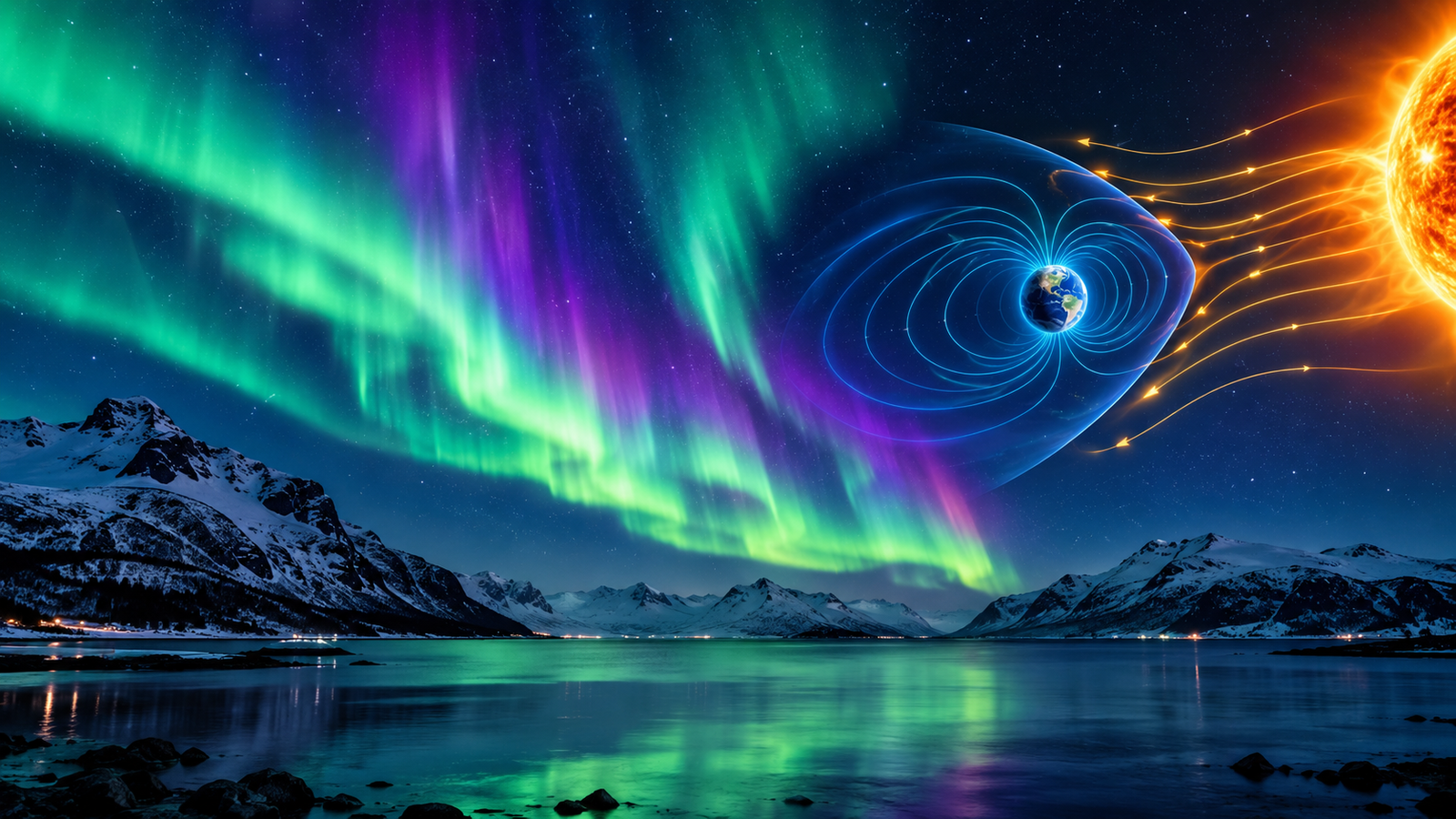
Why Do the Northern Lights Dance? The Science Behind the Aurora Borealis

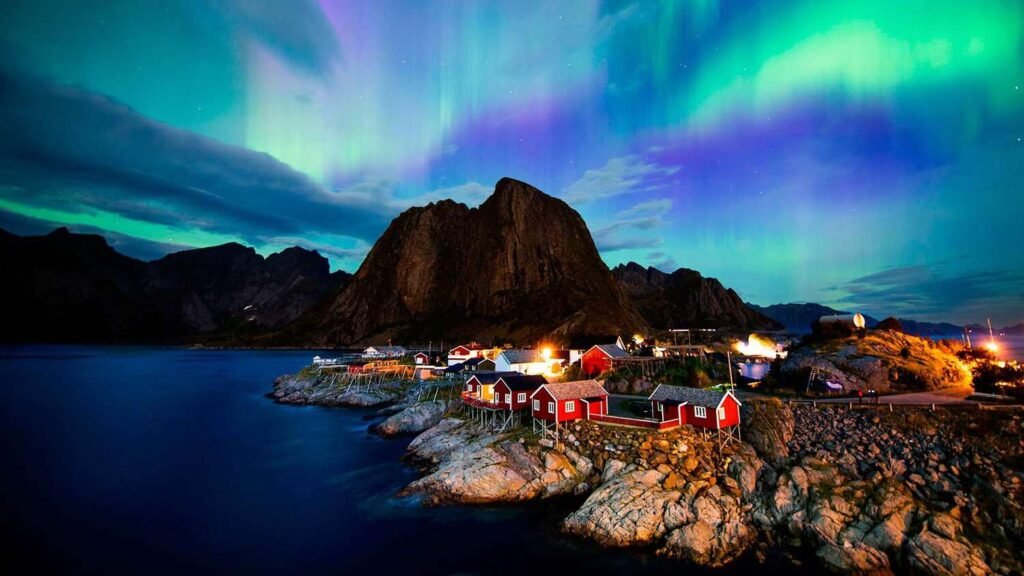
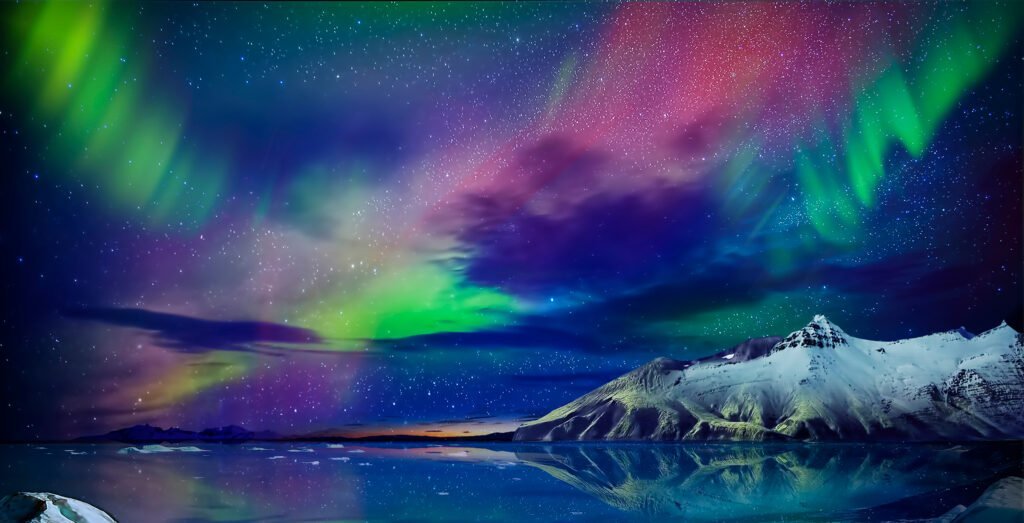
Imagine standing beneath a dark Arctic sky when suddenly ribbons of green, pink and violet begin moving across the horizon. The Northern Lights can feel almost unreal—but behind this spectacular natural phenomenon is a fascinating story of the Sun, charged particles and Earth’s magnetic field.

Known as the Aurora Borealis, the Northern Lights are one of nature’s most extraordinary light shows. But why do they happen, and why do they appear to dance across the sky?

What Are the Northern Lights?

The Northern Lights are colourful lights that appear in the night sky, mainly around the Arctic regions.

They happen when charged particles released by the Sun travel towards Earth and interact with gases in our planet’s upper atmosphere.

When these particles collide with atmospheric gases, energy is released in the form of light. That light creates the glowing curtains and waves that we know as the Aurora Borealis.

Why Does the Aurora Move?

One of the most fascinating things about the Northern Lights is their movement.

The Sun constantly releases a stream of charged particles known as the solar wind. When solar activity becomes stronger, more particles can reach Earth’s magnetic environment.

Earth’s magnetic field guides many of these particles towards the polar regions. As they interact with the atmosphere, the resulting light can shift, ripple and change shape.

This is why an aurora can appear to dance across the sky.

Sometimes the movement is slow and gentle. At other times, the lights can suddenly become much more active, forming rapidly changing waves and arcs.

Why Are the Northern Lights Green?

Green is the colour most commonly associated with the Aurora Borealis.

This happens mainly because energetic particles interact with oxygen at particular heights in Earth’s atmosphere.

However, the aurora isn’t always green.

Depending on atmospheric conditions and the altitude of the interaction, you may also see:

  • Pink
  • Red
  • Purple
  • Blue
  • White or pale shades

Seeing multiple colours during a single display can make the experience even more spectacular.

Where Can You See the Aurora Borealis?

The Northern Lights are most commonly seen in regions close to the Arctic Circle.

Popular destinations include:

  • Finland
  • Norway
  • Sweden
  • Iceland
  • Northern Canada
  • Alaska

Scandinavian destinations are particularly popular among travellers because they combine Aurora viewing with unique winter experiences such as husky safaris, reindeer rides, snow activities and Arctic cruises.

When Is the Best Time to See the Northern Lights?

The Aurora requires darkness, which means the phenomenon is generally associated with the darker months of the year.

For travellers visiting Scandinavia, the season is broadly from late August or September through early spring, depending on the destination.

However, seeing the Northern Lights is never guaranteed. Clear skies, darkness and sufficient solar activity all play a role.

That uncertainty is actually part of what makes an Aurora journey so special.

You can plan the destination, the season and the experience—but the sky decides when the show begins.

The Northern Lights Are More Than Just a Photograph

It is easy to think of the Aurora as something you simply need to photograph.

But experiencing it in person can be completely different.

Standing outside in the cold Arctic night, surrounded by snow and silence, and watching a natural light display unfold above you creates a sense of scale that photographs cannot fully capture.

For many travellers, the most memorable part is not getting the perfect picture—it is simply looking up.

Beyond the Aurora

A Northern Lights holiday can also become an opportunity to experience the Arctic itself.

Depending on your destination, you can combine Aurora hunting with:

  • Husky sledding
  • Reindeer experiences
  • Snowmobile adventures
  • Arctic village visits
  • Glass igloo stays
  • Baltic or Arctic cruises
  • Winter photography
  • Traditional Nordic experiences

This makes a Northern Lights journey much more than a single evening spent watching the sky.

A Natural Wonder Written in Light

The Northern Lights are the result of a beautiful relationship between the Sun, Earth and atmosphere.

What appears to us as a magical dance in the sky is actually a remarkable natural process happening millions of kilometres away from where we stand.

And perhaps that is what makes the Aurora so captivating.

You are not simply watching lights.

You are watching space, atmosphere and our planet come together to create something that may last only a few minutes—or continue throughout an unforgettable Arctic night.

Ready to experience the Aurora for yourself?

Explore Travelexie’s Northern Lights journeys and discover the Arctic landscapes, winter experiences and destinations that make an Aurora holiday truly unforgettable.

Stay Beneath the Northern Lights

A Northern Lights journey is not only about standing beneath the night sky and waiting for the aurora to appear. It is also about where you stay, how you experience the Arctic and the quiet moments that make the journey truly unforgettable. Across the northern regions of Finland, Sweden and Norway, travellers can choose from unique Arctic stays designed to bring together snowy landscapes, peaceful surroundings and warm, comfortable interiors.

Whether you dream of watching the aurora from a glass igloo, relaxing in an elegant Arctic lodge or enjoying a private cabin surrounded by snow, your accommodation can become an important part of the adventure.

Glass Igloo

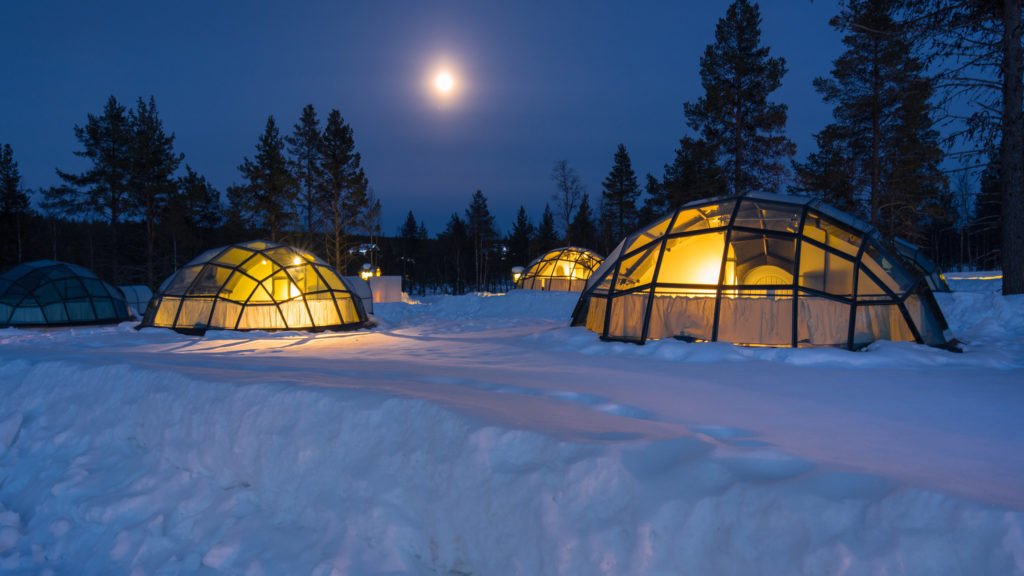
For many travellers, staying in a glass igloo is one of the most memorable ways to experience the Arctic. Designed with panoramic glass roofs, these unique accommodations allow you to enjoy the winter sky from the comfort of your own warm bed.

As snow covers the surrounding landscape and darkness settles over the Arctic, the glass ceiling creates an uninterrupted view of the stars. And when the Northern Lights appear, you can simply look upwards and watch the colours move across the sky without stepping outside into the cold.

Premium Arctic Lodge

A Premium Arctic Lodge combines the atmosphere of the wilderness with the comfort and elegance of a thoughtfully designed stay. Surrounded by snowy forests and peaceful Arctic landscapes, these lodges offer a warm retreat after a day of exploring.

Large windows, cosy interiors and beautiful natural surroundings create an ideal setting for a relaxing winter escape. It is a wonderful choice for travellers who want to experience the Arctic while enjoying a comfortable and refined environment.

Luxury Cabin

A Luxury Cabin offers a more private way to experience the Arctic. Set among snowy landscapes and peaceful wilderness, these cabins create a sense of seclusion while providing the comfort you need during a winter holiday.

Imagine returning after a day of Northern Lights hunting, settling into a warm interior and looking out across a silent snow-covered landscape. The combination of privacy, nature and comfort makes a luxury cabin perfect for couples, families or travellers looking for a peaceful Arctic experience.

Aurora Suite

For a romantic Northern Lights escape, an Aurora Suite can create an especially memorable setting. Designed around comfort, privacy and beautiful Arctic surroundings, these suites provide a relaxing space to enjoy the magic of winter.

After exploring the Arctic during the day, you can return to a warm and intimate setting, unwind and watch the night sky. If the aurora appears, the experience becomes even more special—a peaceful moment shared beneath one of nature’s most extraordinary displays.

Make Your Arctic Stay Part of the Journey

The Northern Lights may be the highlight of your Arctic adventure, but the experience does not have to end when the aurora disappears. From panoramic glass igloos to elegant lodges, private luxury cabins and romantic Aurora Suites, the right stay can turn a winter holiday into a collection of unforgettable moments.

Because sometimes, the most magical part of a Northern Lights journey is simply being somewhere beautiful when the sky comes alive.

SWEDEN

Kiruna • Abisko

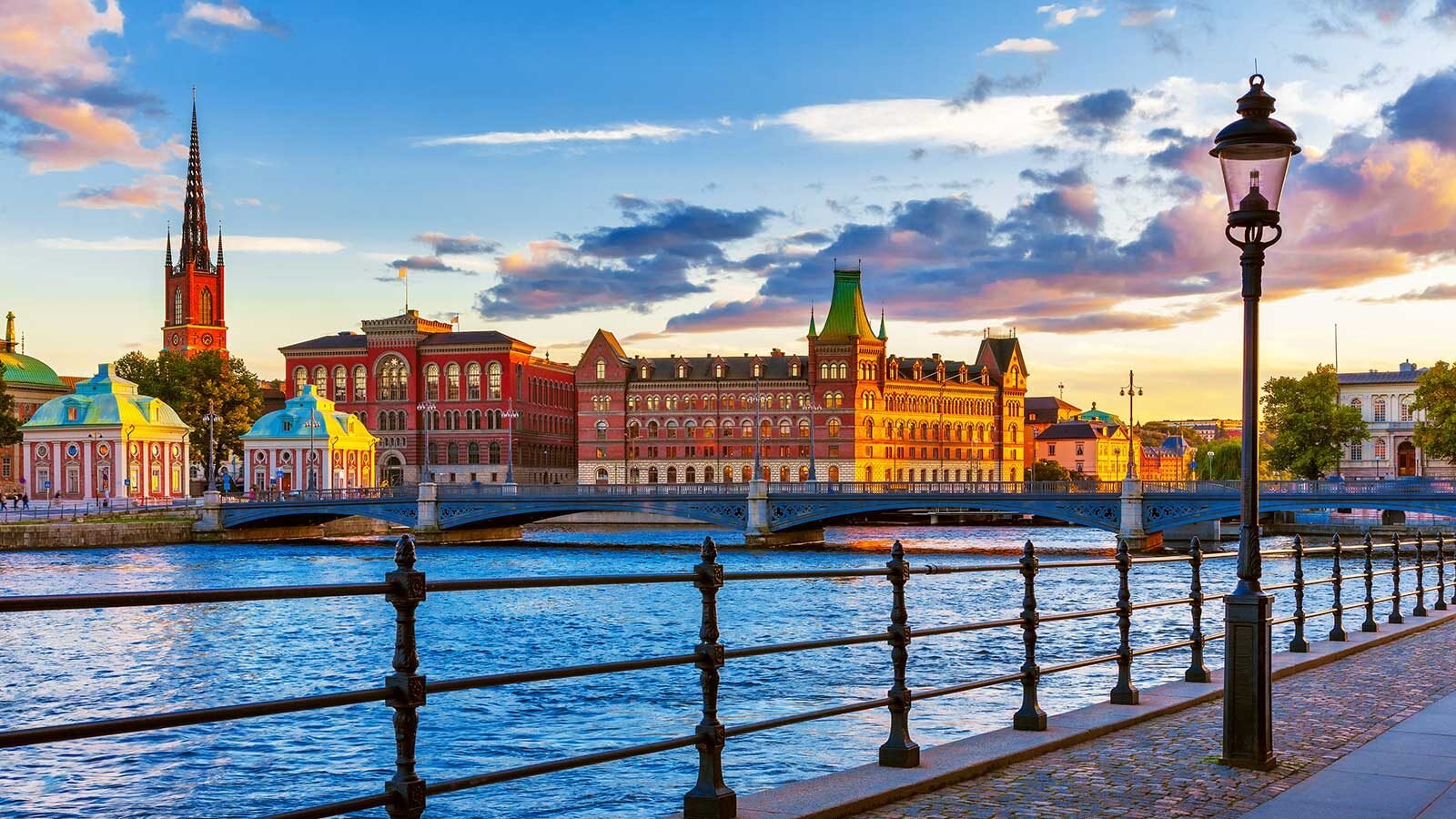
Sweden’s far north is a world of snow-covered landscapes, peaceful wilderness and unforgettable Arctic experiences. Beyond the stylish cities and Scandinavian design, northern Sweden offers a completely different side of the country—one shaped by forests, frozen lakes, mountains and the magical colours of the Northern Lights.

A journey through Kiruna and Abisko takes travellers deep into Swedish Lapland, where nature, adventure and Arctic traditions come together to create an extraordinary escape.

Kiruna — Into Swedish Lapland

Located far above the Arctic Circle, Kiruna is the northernmost city in Sweden and one of the most fascinating gateways to Swedish Lapland. Surrounded by vast forests, frozen landscapes and mountains, the region offers an authentic introduction to Arctic life.

During winter, Kiruna transforms into a snowy wonderland. Travellers can experience exciting activities such as dog sledding, snowmobile adventures and peaceful journeys through the wilderness. The region is also closely connected with the indigenous Sámi culture, offering an opportunity to learn about traditions that have shaped life in northern Scandinavia for generations.

One of Kiruna’s biggest attractions is the possibility of witnessing the Northern Lights. Away from major cities and surrounded by dark Arctic landscapes, the region provides an incredible setting for looking towards the night sky.

Abisko — Beneath the Northern Lights

Continue towards Abisko, a small mountain village located within one of northern Sweden’s most spectacular natural regions. Surrounded by mountains and wilderness, Abisko is widely known for its exceptional Arctic landscapes and clear night skies.

The area’s location and often favourable weather conditions make it a popular destination for Northern Lights experiences. On clear winter nights, the Aurora can appear across the sky in beautiful shades of green, creating one of the most memorable moments of a Scandinavian journey.

During the day, Abisko offers a completely different experience. Snow-covered mountains, frozen lakes and peaceful valleys create an atmosphere of silence and natural beauty. Travellers can enjoy winter walks, snow adventures and scenic experiences surrounded by the Arctic wilderness.

Discover the Beauty of Swedish Lapland

A journey through Kiruna and Abisko is an opportunity to experience Sweden far beyond its famous cities. Here, the landscape becomes the main attraction, with endless forests, dramatic mountains and vast Arctic skies creating unforgettable views.

From the excitement of dog sledding through snowy trails to the peaceful experience of standing beneath the Northern Lights, every moment in Swedish Lapland feels connected to nature.

For travellers searching for an Arctic escape, Sweden offers a perfect combination of adventure, culture and tranquillity. Kiruna and Abisko invite you to slow down, explore the wilderness and experience the magic of the far north.

Swedish Lapland is not simply a place to visit—it is a place to experience. From the first snowfall to the glow of the Aurora above the mountains, the journey promises memories that remain long after you return home.

ICELAND

Reykjavík • Vik • South Coast

Iceland is a land where fire and ice exist side by side. From powerful waterfalls and black-sand beaches to volcanic landscapes, glaciers and steaming geothermal springs, this extraordinary island offers a journey unlike anywhere else. With its dramatic scenery and untouched natural beauty, Iceland is perfect for travellers seeking adventure, tranquillity and unforgettable experiences.

Reykjavík — The Heart of Iceland

Begin your Iceland journey in Reykjavík, the country’s vibrant capital. Compact, colourful and surrounded by spectacular natural landscapes, Reykjavík combines modern Nordic culture with a strong connection to Iceland’s unique heritage.

Explore the city’s charming streets, discover local cafés and restaurants, and visit iconic landmarks such as Hallgrímskirkja church and Harpa Concert Hall. Reykjavík is also an excellent base for exploring the surrounding countryside and experiencing Iceland’s famous geothermal attractions.

During the darker months, the city and its surroundings can also become a starting point for Northern Lights adventures, offering travellers the opportunity to search the night sky for the magical Aurora Borealis.

Vik — Black Beaches & Dramatic Landscapes

Continue towards Vik, a small coastal village surrounded by some of Iceland’s most spectacular scenery. The area is famous for its striking black-sand beaches, created by volcanic activity over thousands of years.

One of the most memorable sights is Reynisfjara Beach, where powerful Atlantic waves meet dark volcanic sand and dramatic basalt formations. Offshore, the distinctive Reynisdrangar sea stacks rise from the ocean, creating an unforgettable backdrop.

Vik’s location also makes it an ideal stop for exploring the surrounding waterfalls, cliffs and volcanic landscapes. Every viewpoint offers another reason to stop, photograph and appreciate Iceland’s raw natural beauty.

South Coast — Iceland in Its Wildest Form

The South Coast of Iceland is a spectacular journey through some of the country’s most famous natural wonders. Along the route, travellers can encounter powerful waterfalls, glaciers, volcanic landscapes and vast open countryside.

Seljalandsfoss is particularly special because visitors can walk behind the waterfall when conditions allow. Nearby, Skógafoss creates an impressive wall of falling water surrounded by green landscapes and rugged cliffs.

Further along the coast, glaciers and volcanic terrain reveal the powerful geological forces that continue to shape Iceland. The combination of ice, fire, ocean and mountains makes the South Coast one of the country’s most remarkable regions.

Experience the Magic of Iceland

A journey through Reykjavík, Vik and the South Coast brings together the many faces of Iceland. From the energy of the capital to the peaceful beauty of remote coastal landscapes, every destination offers something unique.

Whether you dream of standing beneath a waterfall, walking across a dramatic black-sand beach, exploring volcanic landscapes or watching the Northern Lights dance across the sky, Iceland promises an experience filled with adventure and wonder.

Iceland is more than a destination—it is a place where nature feels powerful, untouched and beautifully unpredictable. Come discover a land shaped by fire and ice, where every road leads to another extraordinary view.

NORWAY

Tromsø • Lofoten • Alta

Norway is a destination where nature takes centre stage. From majestic fjords and snow-covered mountains to charming fishing villages and the magical Northern Lights, Norway offers an unforgettable journey into the heart of the Arctic. With its dramatic landscapes, peaceful surroundings and unique Nordic culture, it is a perfect destination for travellers looking for something extraordinary.

Tromsø — Gateway to the Arctic

Located above the Arctic Circle, Tromsø is one of Norway’s most fascinating northern destinations. Often known as the Gateway to the Arctic, the city combines vibrant Scandinavian life with spectacular wilderness.

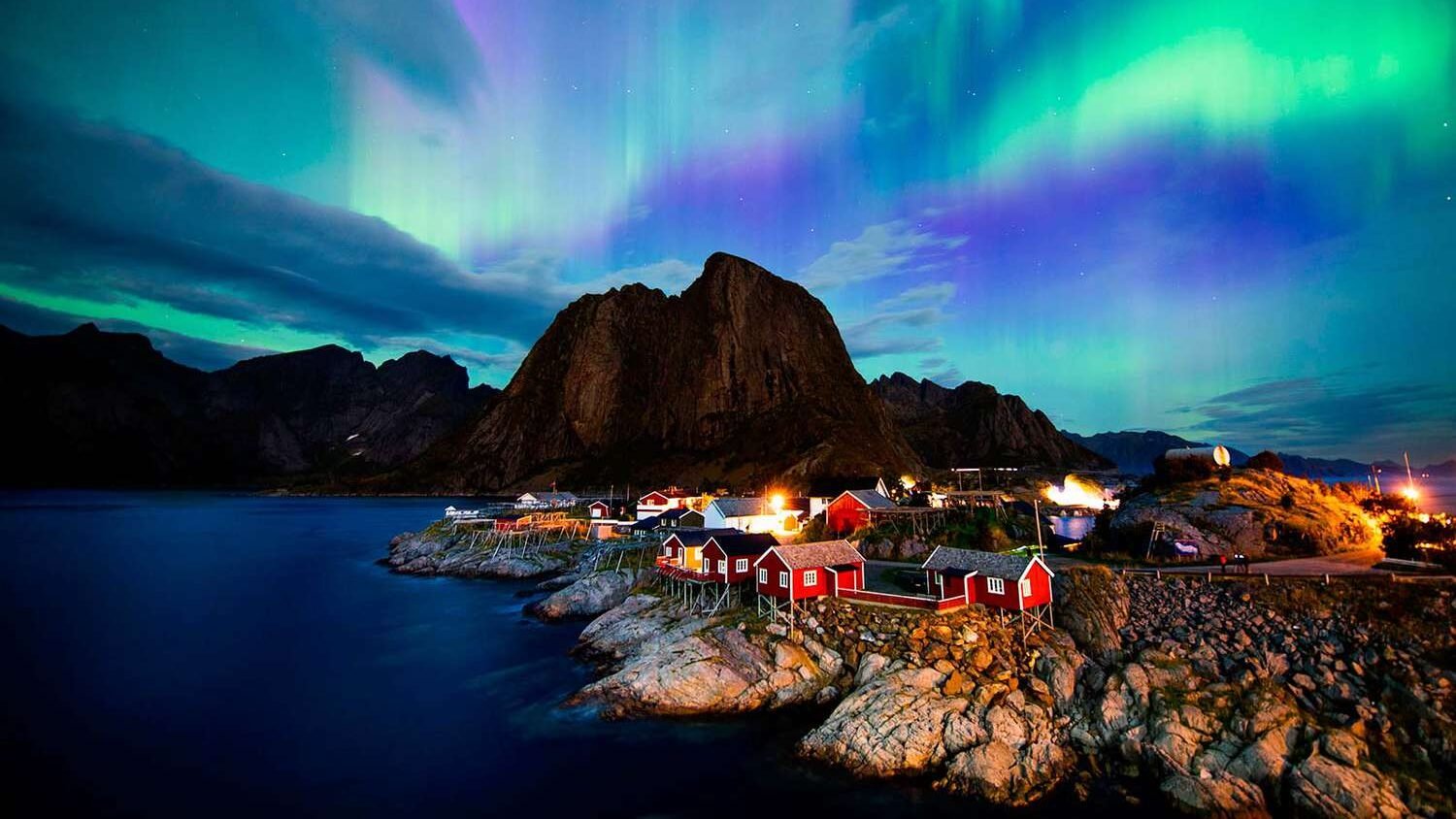
During the winter months, Tromsø becomes a dream destination for Northern Lights seekers. On clear nights, the sky can come alive with shades of green, pink and violet as the Aurora Borealis dances above the snowy landscape. Beyond the Northern Lights, visitors can enjoy Arctic adventures such as dog sledding, snowmobile excursions and scenic fjord experiences.

The city itself is equally charming, with colourful streets, local cafés, museums and beautiful views of the surrounding mountains and waters.

Lofoten — Where Mountains Meet the Sea

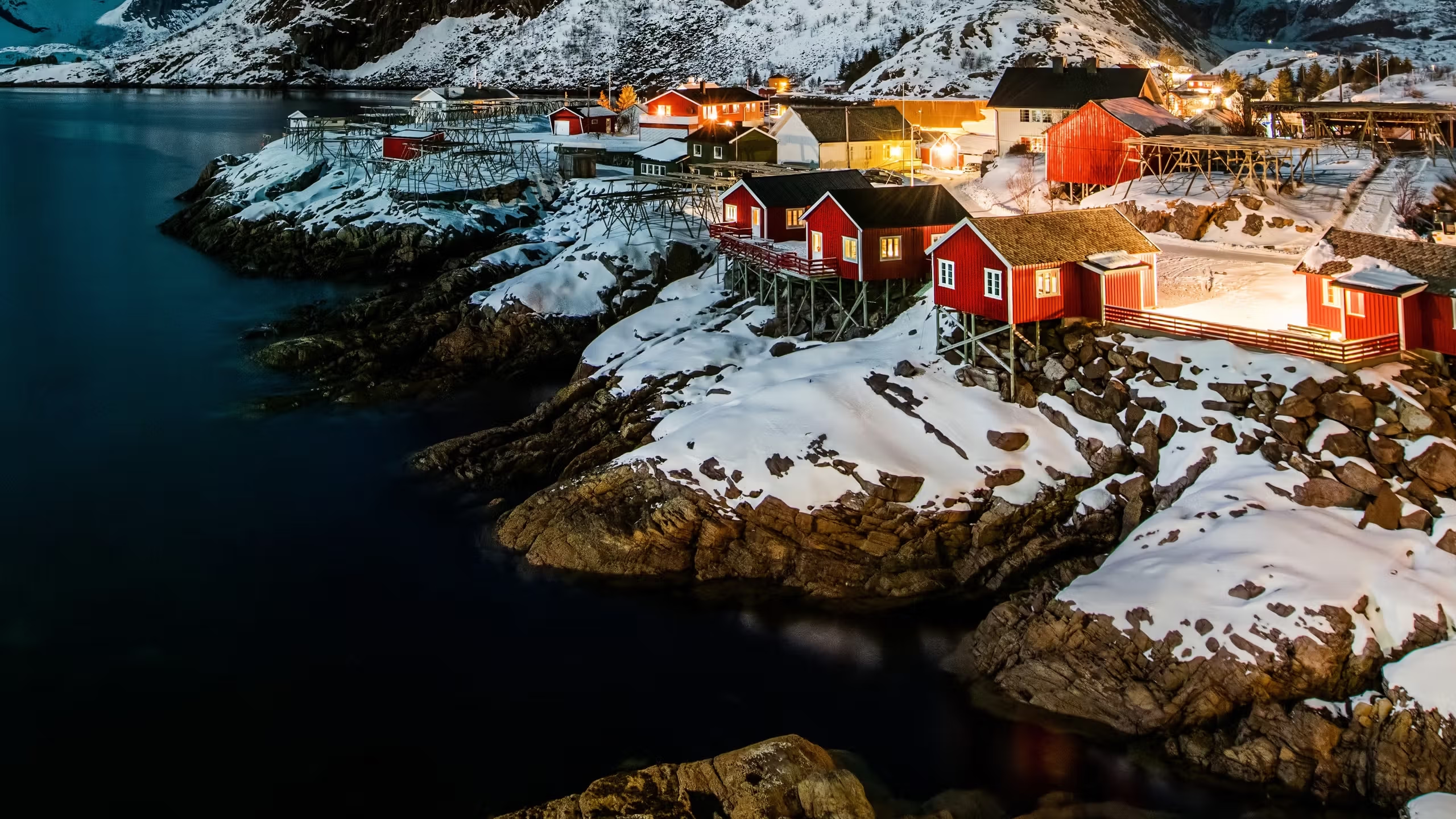
Further south lies the breathtaking Lofoten archipelago, one of Norway’s most picturesque regions. Towering mountains rise dramatically from the sea, while small fishing villages sit along peaceful bays and rocky coastlines.

Lofoten is famous for its traditional rorbu, the colourful fishermen’s cabins that add character to the landscape. Places such as Reine, Henningsvær and Svolvær offer incredible scenery at every turn.

Whether you’re exploring coastal roads, photographing dramatic peaks or simply enjoying the quiet beauty of a remote Arctic village, Lofoten provides a truly immersive experience. During winter, snow-covered mountains create a magical atmosphere, while the summer brings long daylight hours and spectacular coastal views.

Alta — Into the Arctic Wilderness

Known as the City of the Northern Lights, Alta offers another remarkable Arctic experience. Its wide-open landscapes, forests and snow-covered surroundings make it an ideal destination for travellers who want to experience Norway beyond the cities.

Alta is particularly special during winter, when the region becomes a playground for Arctic adventures. Visitors can experience husky sledding, snow activities and peaceful wilderness excursions while discovering the traditions and culture of northern Norway.

The region is also home to fascinating traces of ancient human history, adding a cultural dimension to its natural beauty.

Discover the Magic of Norway

A journey through Tromsø, Lofoten and Alta brings together some of the most memorable experiences of northern Norway. From watching the Aurora Borealis illuminate the night sky to travelling through dramatic mountain landscapes and discovering traditional Arctic communities, every moment feels different.

Norway is not simply a place to visit—it is a destination to experience slowly, surrounded by nature, silence and breathtaking scenery. Whether your dream is to chase the Northern Lights, explore Arctic landscapes or discover the beauty of Scandinavian life, Norway offers an unforgettable journey into the north.

FINLAND — LAPLAND

Rovaniemi • Saariselkä • Levi

Welcome to Finnish Lapland, a magical Arctic destination where endless snowy landscapes, peaceful forests, and unforgettable winter experiences come together. Located in the far north of Finland, Lapland feels like stepping into a real-life winter story. From the vibrant Arctic town of Rovaniemi to the quiet wilderness of Saariselkä and the adventurous atmosphere of Levi, every destination offers a unique way to experience the beauty of the North.

Rovaniemi — The Official Hometown of Santa Claus

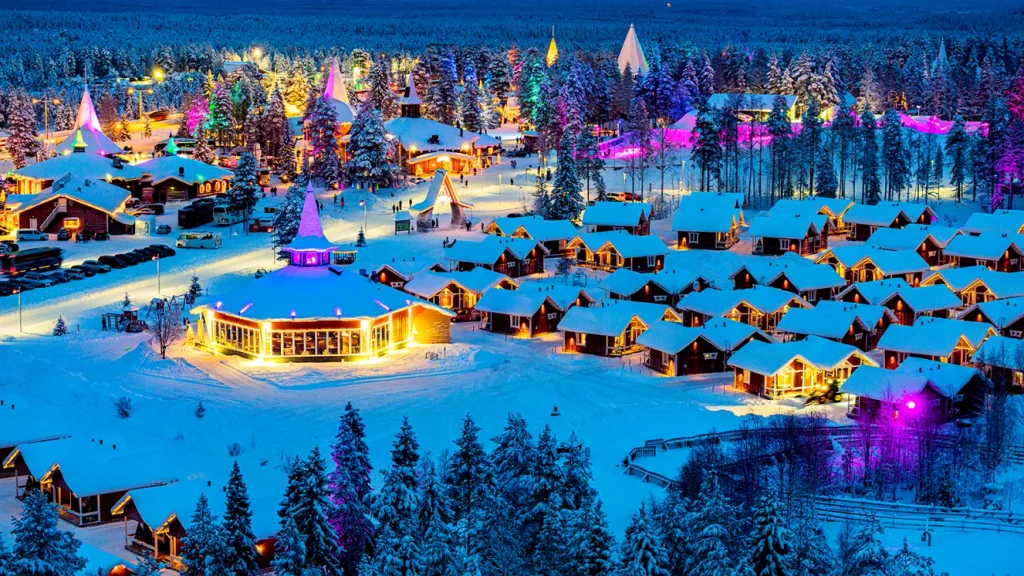
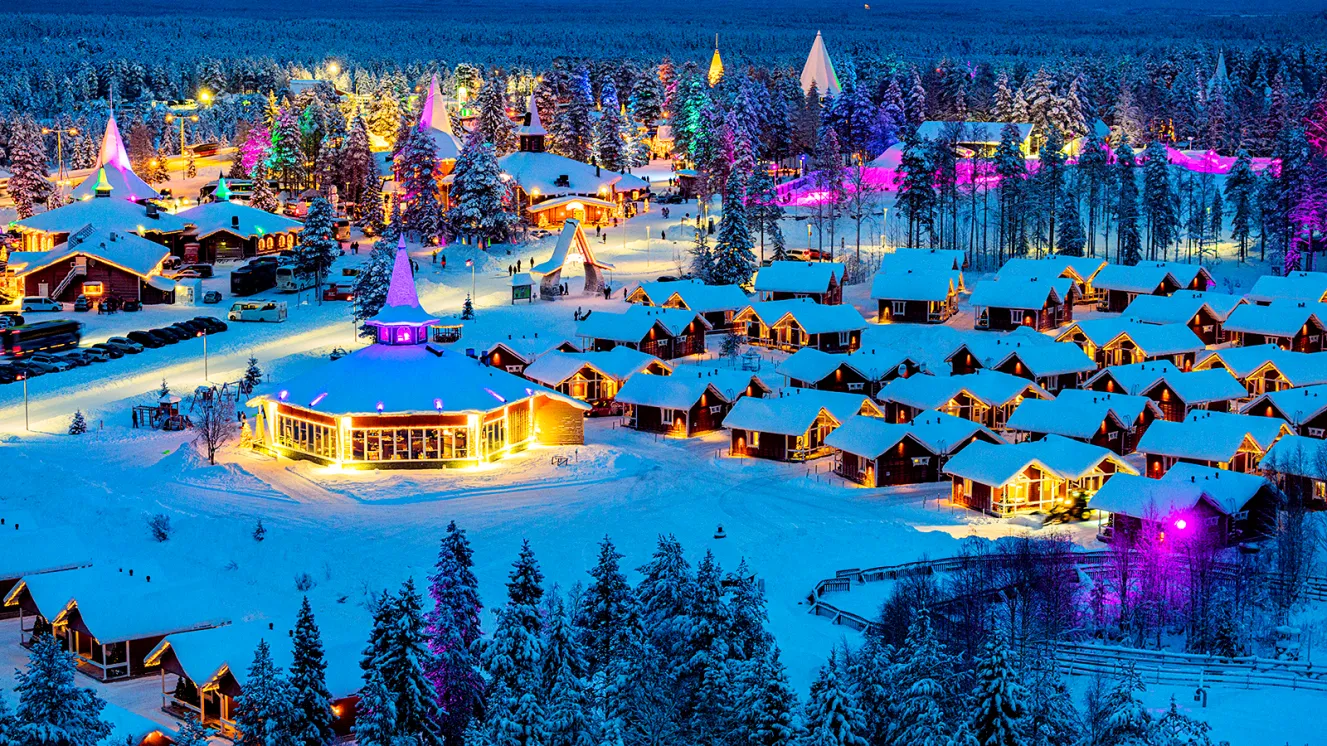
Rovaniemi is the perfect introduction to Lapland and one of Finland’s most popular winter destinations. Located on the Arctic Circle, the city is famous for its connection with Santa Claus and its enchanting Christmas atmosphere.

A visit to Santa Claus Village is a must, where you can cross the Arctic Circle, meet Santa, send postcards from Santa’s official post office, and explore charming shops and cafés. Beyond Christmas magic, Rovaniemi offers exciting Arctic adventures including husky sled rides, reindeer experiences, snowmobile safaris, and Northern Lights tours.

As night falls, the surrounding wilderness becomes the perfect setting for watching the Aurora Borealis dance across the dark Arctic sky.

Saariselkä — Peaceful Arctic Wilderness

For travellers looking for tranquillity and untouched nature, Saariselkä offers a beautiful escape into the heart of Finnish Lapland. Surrounded by forests, snowy hills, and vast Arctic landscapes, this small resort village is known for its peaceful atmosphere and spectacular natural scenery.

Saariselkä is an excellent place to enjoy winter activities such as husky safaris, reindeer rides, snowshoeing, cross-country skiing, and snowmobile excursions. The area is also renowned for its opportunities to experience the Northern Lights away from busy city environments.

Imagine staying in a cosy glass-roofed cabin, surrounded by snow-covered trees, while the night sky above you transforms into shades of green and violet. It is an experience that perfectly captures the magic of Lapland.

Levi — Adventure in the Arctic

Levi brings together breathtaking scenery, outdoor adventure, and a lively resort atmosphere. Located in Finnish Lapland, it is particularly popular with travellers who want to combine snowy landscapes with exciting activities.

During winter, Levi becomes a hub for skiing and snowboarding, while visitors can also enjoy snowmobile rides, husky safaris, reindeer tours, and scenic Arctic excursions. After a day outdoors, cosy restaurants, cafés, and comfortable accommodation provide the perfect place to relax.

Levi is also an excellent base for searching for the Northern Lights, offering opportunities to experience the spectacular phenomenon surrounded by peaceful Arctic landscapes.

Experience the Magic of Lapland

A journey through Rovaniemi, Saariselkä, and Levi offers more than just a winter holiday. It is an opportunity to experience the silence of snowy forests, the excitement of Arctic adventures, the warmth of Finnish hospitality, and the breathtaking beauty of the Northern Lights.

From meeting Santa Claus in Rovaniemi to exploring the wilderness of Saariselkä and discovering the adventurous side of Levi, Finnish Lapland creates unforgettable moments at every turn.

Discover Finland with Travelexie and experience the Arctic wonderland for yourself.

HIROSHIMA — A CITY OF PEACE AND HOPE

HIROSHIMA — A CITY OF PEACE AND HOPE

Hiroshima is a city with a powerful history and a remarkable spirit of renewal. Today, it is known not only for its past, but also for its peaceful atmosphere, beautiful landscapes, cultural heritage, and message of hope. A visit to Hiroshima offers travellers an opportunity to reflect, learn, and experience a deeply meaningful side of Japan.

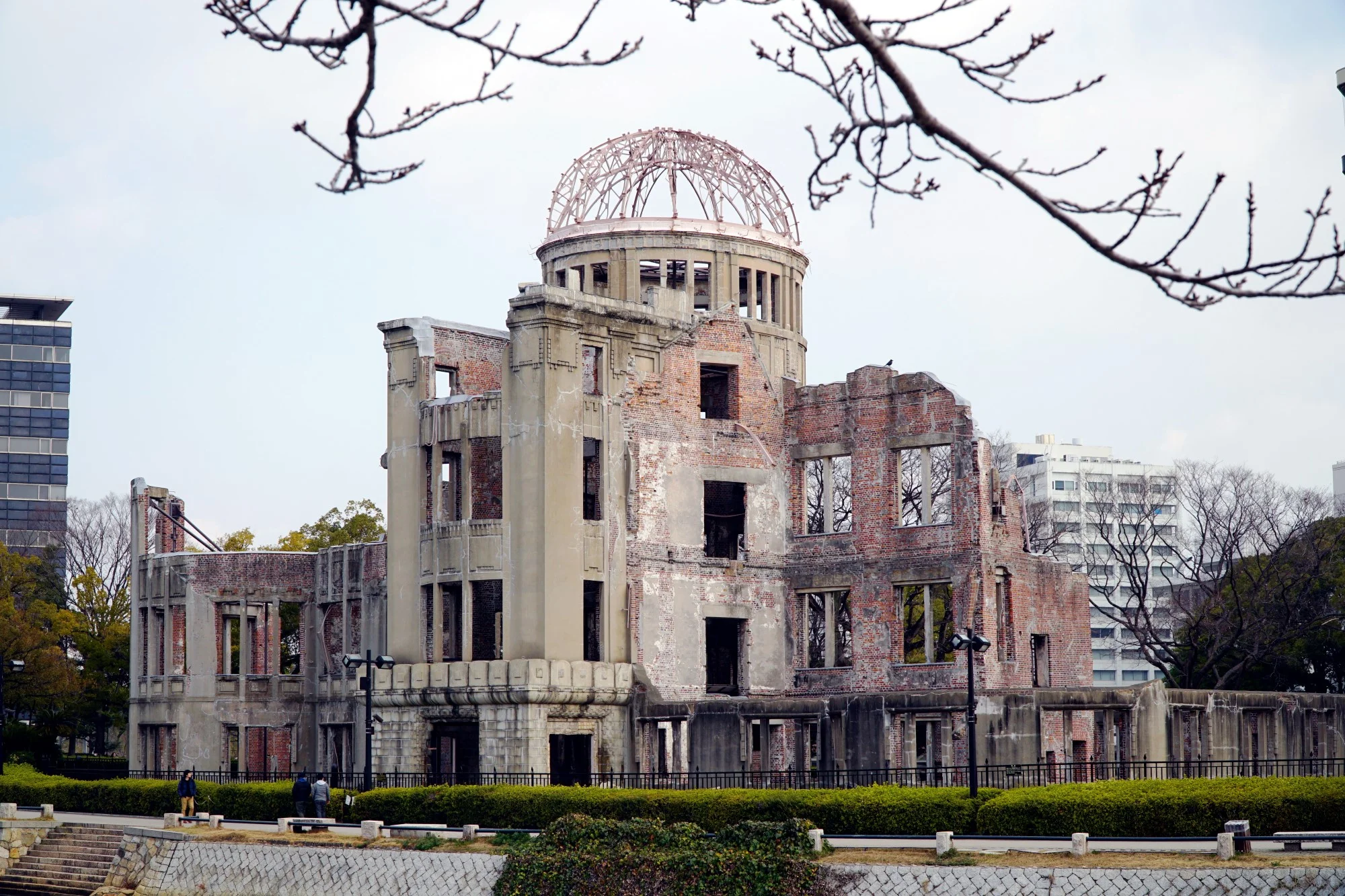
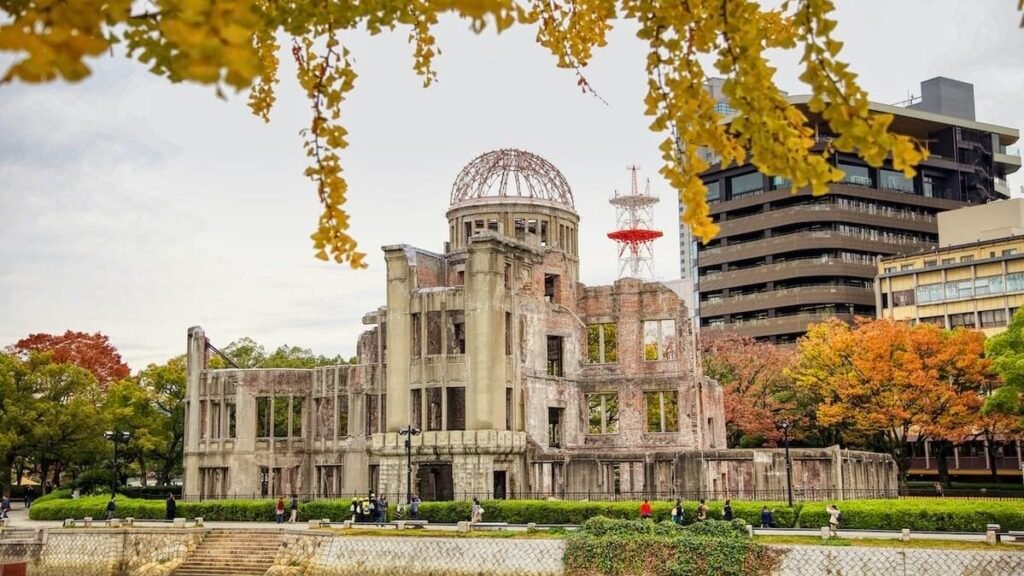
At the centre of the city is the Hiroshima Peace Memorial Park, a peaceful green space dedicated to remembering the victims of the atomic bombing of 1945. The Atomic Bomb Dome, one of Hiroshima’s most recognizable landmarks, remains standing as a symbol of the city’s history. The Peace Memorial Museum provides historical information and personal accounts that help visitors understand the human impact of the event.

While Hiroshima carries this important history, the modern city is vibrant and welcoming. Wide streets, rivers, cafés, restaurants, shopping areas, and lively neighbourhoods show how the city has rebuilt and developed over the decades.

Hiroshima is also famous for its local cuisine. One of the city’s signature dishes is Hiroshima-style okonomiyaki, prepared in layers with ingredients such as cabbage, noodles, batter, and other toppings. Exploring the local food scene is an excellent way to experience the city’s everyday culture.

A short journey from central Hiroshima takes travellers to Miyajima, one of Japan’s most beautiful island destinations. The island is famous for Itsukushima Shrine and its iconic torii gate, which appears to float above the water during high tide. Surrounded by mountains and sea, Miyajima combines spiritual heritage with spectacular natural scenery.

Visitors can explore the island’s traditional streets, enjoy local seafood and snacks, discover peaceful temples, or hike through the surrounding hills. The contrast between Hiroshima’s urban environment and Miyajima’s natural beauty makes the combination especially memorable.

Hiroshima also offers beautiful seasonal experiences. Spring brings cherry blossoms to parks and temple grounds, while autumn colours transform the surrounding mountains. The region’s mild atmosphere and scenic waterways make it enjoyable throughout much of the year.

What makes Hiroshima unique is the way history and modern life exist together. Its past is never forgotten, but the city also looks forward with a strong message of peace and hope.

For travellers exploring Japan, Hiroshima provides more than sightseeing. It offers a chance to understand an important part of Japanese history while discovering a city that has rebuilt itself into a destination filled with culture, nature, food, and warmth.

Hiroshima is a journey through memory, resilience, beauty, and hope—a place that stays with you long after you leave.

HOKKAIDO — JAPAN’S WILD ESCAPE

HOKKAIDO — JAPAN’S WILD ESCAPE

Hokkaido offers a completely different side of Japan. Located in the northernmost part of the country, this vast island is known for its dramatic landscapes, snowy mountains, peaceful countryside, vibrant cities, and incredible seasonal beauty. For travellers looking to experience Japan beyond its famous urban destinations, Hokkaido feels like a refreshing escape into nature.

The island is especially famous for its winter landscapes. Heavy snowfall transforms Hokkaido into a spectacular white wonderland, attracting travellers from around the world for skiing, snowboarding, and winter experiences. Niseko is one of the region’s most popular destinations, known for its powder snow and mountain scenery.

Winter also brings one of Hokkaido’s most magical experiences—the Sapporo Snow Festival. Giant snow and ice sculptures transform the city into a spectacular winter attraction, combining creativity, entertainment, and Japanese culture.

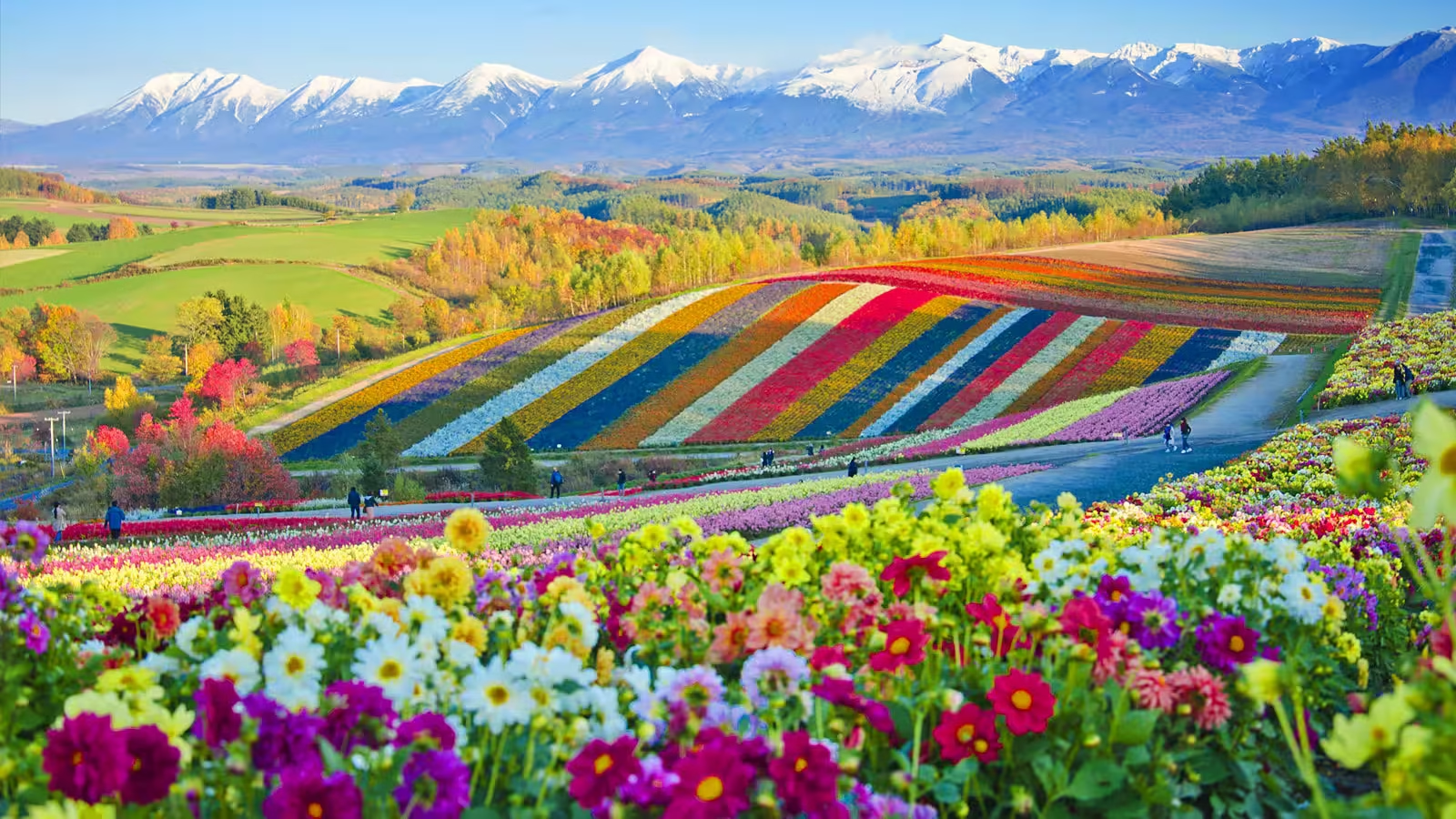
But Hokkaido is not only a winter destination. During summer, the island bursts into colour. The lavender fields of Furano become one of the region’s most photographed landscapes, while Biei is known for rolling hills, colourful flower fields, and peaceful countryside roads.

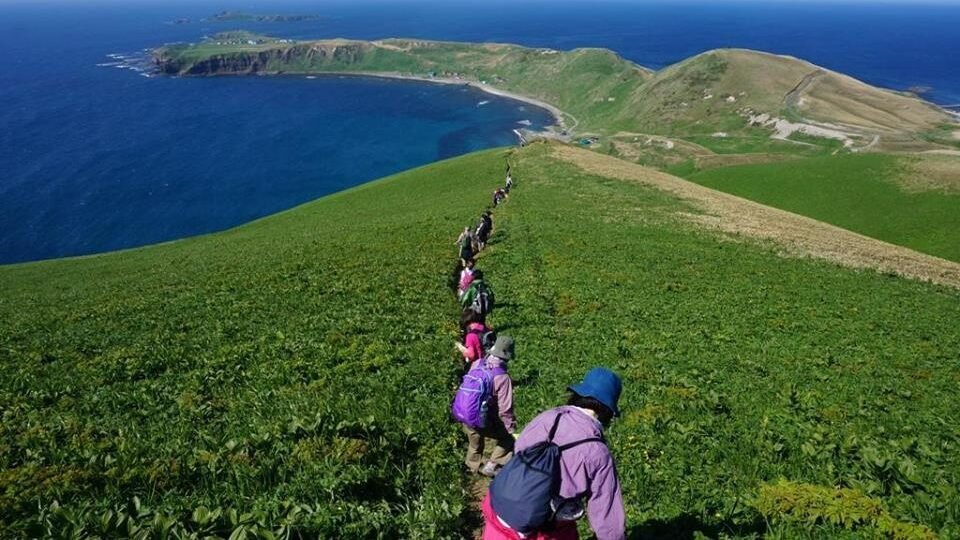
Hokkaido’s natural beauty extends far beyond its famous towns. Daisetsuzan National Park, Japan’s largest national park, offers mountains, forests, alpine landscapes, and hiking opportunities. The region is ideal for travellers who want to explore Japan’s wilder side and spend time surrounded by open landscapes.

Food is another major reason to visit Hokkaido. The island is celebrated for its fresh seafood, rich dairy products, creamy desserts, ramen, and regional specialities. Sapporo miso ramen, fresh crab, sea urchin, salmon, and locally produced milk and cheese are just some of the flavours that make Hokkaido a favourite among food lovers.

The island also offers a slower way of travelling. Scenic train journeys, countryside drives, peaceful lakes, hot springs, and traditional onsen allow visitors to step away from the pace of Japan’s major cities.

Hokkaido changes dramatically throughout the year. Winter brings snow-covered mountains, spring introduces fresh greenery, summer fills the countryside with flowers, and autumn paints forests and mountain landscapes in warm shades of red and gold.

What makes Hokkaido special is its sense of space. The landscapes feel expansive, the air feels fresh, and the connection with nature is impossible to miss. From snowy mountain adventures to quiet countryside escapes, every season offers a different reason to explore.

Hokkaido is where Japan feels wild, open, peaceful, and beautifully untamed—a journey for travellers who want to discover nature at its most spectacular.

NARA — WHERE NATURE MEETS TRADITION

NARA — WHERE NATURE MEETS TRADITION

Just a short journey from Kyoto and Osaka, Nara offers a peaceful escape into one of Japan’s most historic destinations. Known for its ancient temples, beautiful parks, traditional streets, and freely roaming deer, Nara creates a slower and more intimate experience of Japan.

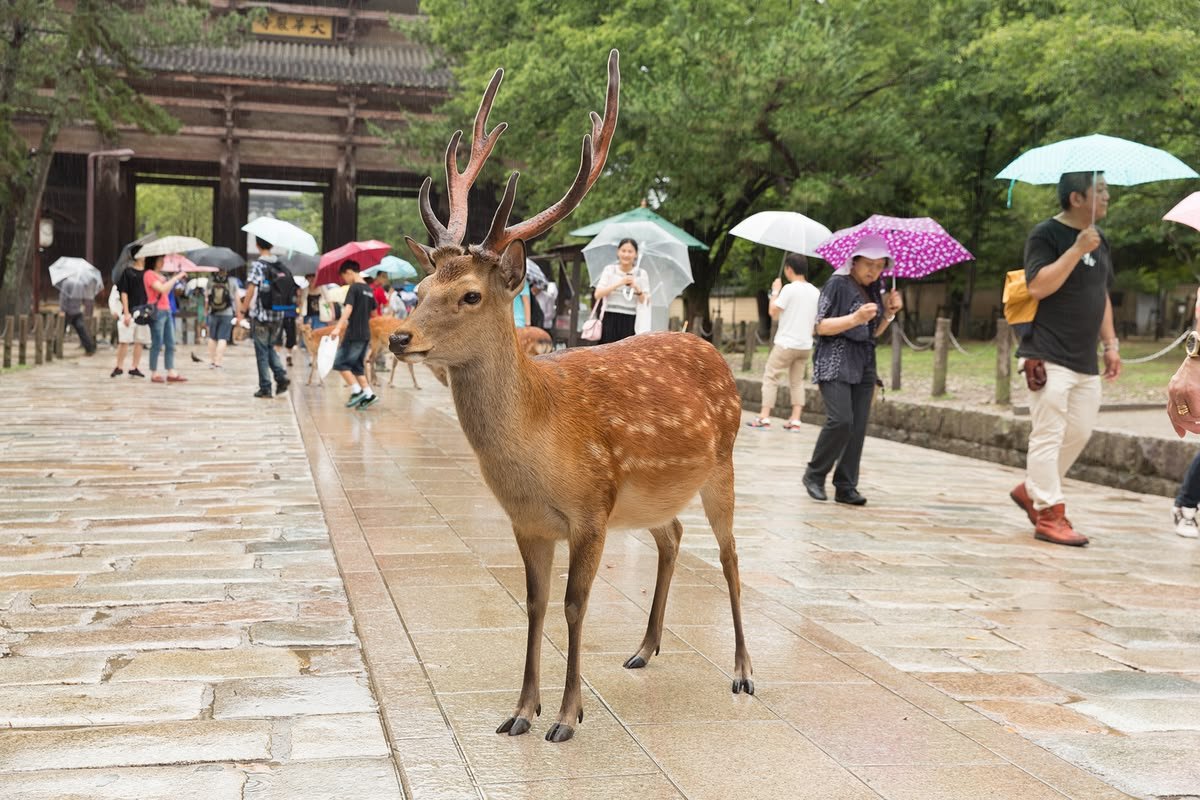
The heart of Nara is Nara Park, a vast green space where hundreds of friendly deer wander freely among visitors. These deer have become one of the city’s most famous symbols and are deeply connected with the area’s cultural history. Walking through the park while surrounded by nature and deer is an experience that feels completely different from Japan’s busy metropolitan cities.

Nara is also home to some of Japan’s most important historic landmarks. Todai-ji Temple is particularly remarkable for its enormous wooden structure and the famous Great Buddha statue housed inside. The scale and craftsmanship of the temple offer a powerful glimpse into Japan’s architectural and spiritual heritage.

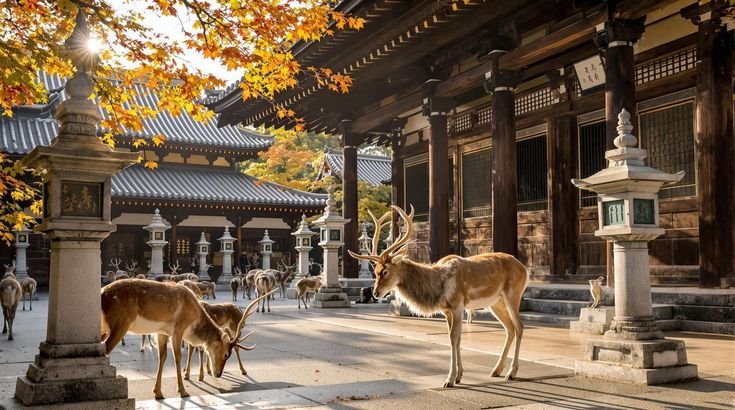
Another unforgettable experience is walking through the paths around Kasuga Taisha, a historic Shinto shrine surrounded by forest. Stone lanterns line the peaceful routes, while moss-covered surroundings and towering trees create a serene atmosphere.

Beyond the major landmarks, Nara is a wonderful city to explore on foot. Traditional streets, small cafés, local shops, gardens, and historic buildings make wandering through the city feel like stepping into another era. Unlike the fast pace of Tokyo or the bustling streets of Osaka, Nara encourages visitors to slow down and appreciate the details.

Nara’s connection with Japanese history is especially significant. The city served as Japan’s capital during the 8th century, a period when Buddhism, art, architecture, and culture developed rapidly. Many of the temples and cultural treasures found here reflect this important chapter in Japan’s history.

Seasonal beauty makes Nara even more memorable. Cherry blossoms transform the parks in spring, while autumn brings warm colours to the surrounding forests and temple grounds. Early mornings can be especially peaceful, with soft light falling across the park and historic architecture.

Nara is also easy to combine with a wider Japan itinerary. Its location makes it a convenient day trip from Kyoto or Osaka, allowing travellers to experience ancient temples and natural landscapes without needing a long stay.

What makes Nara special is the balance between history, nature, and everyday Japanese life. Here, centuries-old temples stand among forests, deer walk peacefully through the streets, and visitors can experience Japan at a gentler pace.

Nara is where Japan’s history feels close, nature feels peaceful, and every quiet path leads to something timeless.